

Key takeaways
- Small lakes and protected water: A 10–12-foot sit-on-top with a 32–35-inch beam is a practical starting point. It should have adjustable foot braces, a supportive elevated seat, at least one sealed hatch, and deck tank-well storage.
- Longer paddles or exposed reservoirs: A 12–14-foot hull with a defined keel or moderate rocker tracks better and carries gear more efficiently. Avoid excessive width if you will paddle several miles at a time.
- Standing and casting: Look for a broad, flat, multi-chine hull and a genuinely rigid deck. “Stand-up capable” should be confirmed in the manufacturer’s specifications, not inferred from appearance.
- Motorized fishing: A pedal-drive or motor-compatible model can reduce fatigue, but it adds weight, maintenance, and launch complexity. Check whether the drive, rudder, battery, and mounting hardware are included.
The best kayaks are the ones whose hull shape, dimensions, capacity, seating, and storage match how you will actually paddle: choose a wide sit-on-top for fishing and easy entry, a shorter recreational kayak for calm-water outings, a longer narrow touring kayak for distance, or a purpose-built tandem when two people will regularly share the boat.
Our top picks
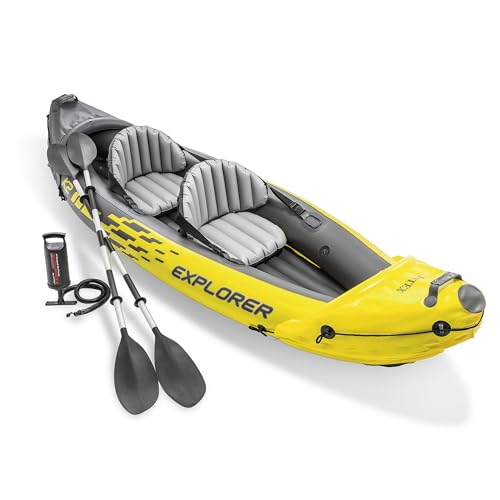

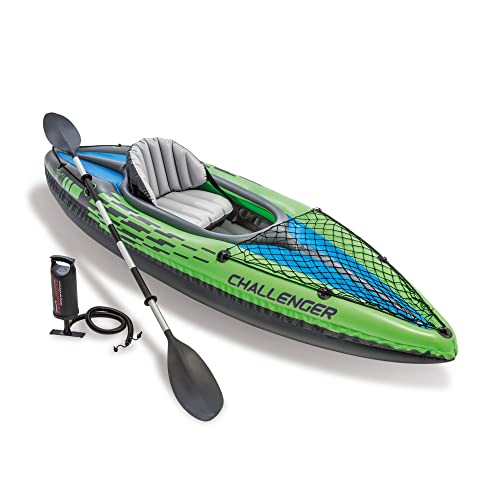

As an Amazon Associate we earn from qualifying purchases at no extra cost to you. Ratings are shown as listed on Amazon.
Best kayak types by use
| Use case | Recommended design | Useful target specifications | Main compromise |
|---|---|---|---|
| Fishing on lakes, ponds, and slow rivers | Wide sit-on-top fishing kayak | 10–13 ft; 32–36 in wide; 60–100 lb; 400–550 lb capacity | Stable and roomy, but slower and harder to carry |
| Relaxed recreational paddling | Moderately wide sit-in or sit-on-top | 9–12 ft; 28–33 in wide; 35–55 lb; 250–350 lb capacity | Less efficient for long-distance travel |
| Day touring and exercise | Longer sit-in touring kayak | 12–15 ft; 23–27 in wide; 45–65 lb; 275–400 lb capacity | More demanding balance and less convenient for casual entry |
| Two adults sharing one boat | Dedicated tandem recreational kayak | 12–14 ft; 31–35 in wide; 55–75 lb; 425–600 lb capacity | Bulky to transport and difficult to paddle alone |
These are selection targets rather than universal rules. A kayak’s usable capacity must include paddlers, clothing, water, tackle, and all other equipment. For safety and handling, staying below the manufacturer’s maximum load is preferable to filling it to the limit.
Best kayaks for fishing
For fishing, stability and organization usually matter more than speed. A wide sit-on-top hull gives you a stable platform for casting, easier access to tackle, and a less stressful way to re-enter the boat if you capsize. The trade-off is increased wind resistance and a heavier hull.
Choose a fishing kayak by water and transport
- Small lakes and protected water: A 10–12-foot sit-on-top with a 32–35-inch beam is a practical starting point. It should have adjustable foot braces, a supportive elevated seat, at least one sealed hatch, and deck tank-well storage.
- Longer paddles or exposed reservoirs: A 12–14-foot hull with a defined keel or moderate rocker tracks better and carries gear more efficiently. Avoid excessive width if you will paddle several miles at a time.
- Standing and casting: Look for a broad, flat, multi-chine hull and a genuinely rigid deck. “Stand-up capable” should be confirmed in the manufacturer’s specifications, not inferred from appearance.
- Motorized fishing: A pedal-drive or motor-compatible model can reduce fatigue, but it adds weight, maintenance, and launch complexity. Check whether the drive, rudder, battery, and mounting hardware are included.
Examples of established fishing-kayak families include the Old Town Sportsman series, Wilderness Systems’ fishing models, Hobie Mirage fishing kayaks, and Perception Outlaw models. Exact layouts and capacities vary by length, so compare the individual model rather than relying on the range name.
Best kayaks for touring and distance
Touring kayaks prioritize efficient glide, directional control, and storage for longer trips. A 14-foot boat generally covers distance more easily than a 10-foot recreational kayak because its longer waterline reduces the need for constant corrective strokes. A narrower hull also reduces drag, but it demands better balance and technique.
For day touring on sheltered water, look for a sit-in kayak around 12–15 feet long with front and rear bulkheads, watertight hatches, perimeter deck lines, and adjustable foot braces. A skeg is useful when wind pushes the stern sideways; a rudder helps with steering, especially when carrying a load or paddling in current. Neither replaces basic edging and paddle skills.
Touring storage should be measured in practical terms. Two sealed compartments are more useful than one large open area: keep spare clothing, first-aid supplies, and electronics in dry bags inside the hatches, while water and frequently used items remain accessible on deck. A cockpit that is too large may feel comfortable but can provide less control; one that is too small can make entry and exit difficult.
Best kayaks for recreation
Recreational kayaks are the sensible choice for short trips, calm water, and beginners who want a forgiving boat. Sit-in models shield your lower body from sun and splash, while sit-on-top models are easier to enter, drain naturally, and share with family members.
A recreational hull with moderate width and a rounded or shallow-arch bottom is usually a better compromise than either extreme. A very flat hull feels stable initially but can slap in waves and wander in wind. A very narrow, rounded hull may glide well but feel twitchy to a first-time paddler.
Short boats under 10 feet are convenient in a garage and on small launch sites, but they tend to turn quickly and track less effectively. If your usual trip is more than a few miles, moving up to 11 or 12 feet often improves efficiency without making transport unreasonable.
Well-known recreational lines include the Wilderness Systems Pungo, Perception Joy Ride, Pelican recreational models, and Ocean Kayak Malibu sit-on-tops. Check the seat adjustment, cockpit dimensions, replacement-part availability, and actual carry weight before choosing by brand alone.
Best tandem kayaks
A tandem kayak makes sense when two people will use it frequently, rather than as an occasional solution. Dedicated tandems have two properly positioned seats, enough legroom for both paddlers, and a hull balanced for the combined load. A 12–14-foot recreational tandem is generally more manageable than an extra-long touring tandem.
Tandem paddling works best when both people understand that the front paddler sets the rhythm while the rear paddler contributes most of the steering. If one paddler is much stronger, an adjustable seat and adequate foot support become especially important. Some tandems allow the rear seat to move toward the center for solo use; this feature is valuable, but it does not make a heavy tandem handle like a dedicated solo kayak.
Ocean Kayak Malibu Two and Wilderness Systems Tarpon or Pamlico tandem-oriented models are examples of established recreational designs. Compare the combined capacity with the weight of both people plus equipment, and measure your vehicle or storage area before buying.
A decision matrix for choosing the best kayak
| Your situation | Best fit | Why | Avoid |
|---|---|---|---|
| Limited budget, occasional outings | 9–11 ft recreational kayak | Lower purchase and transport costs with simple maintenance | Adding expensive fishing accessories before learning what you need |
| First kayak, low confidence | 30–34 in wide sit-on-top or stable sit-in | Easy entry and forgiving initial stability | Narrow touring hull chosen only for its speed |
| Small apartment or compact vehicle | 10 ft or shorter, under about 45 lb | More manageable for solo loading and storage | 12–14 ft fishing kayaks with fixed seating and drives |
| Frequent long day trips | 12–15 ft touring kayak | Better tracking, glide, and sealed storage | Very wide recreational boats that require constant correction |
| Frequent fishing with substantial gear | 12–14 ft fishing kayak with elevated seat | More capacity, deck organization, and comfort | Light recreational kayaks overloaded with crates and batteries |
| Two regular users | Dedicated tandem, preferably with solo conversion | Better trim and seating than improvising with two separate paddlers | Buying a tandem when solo use will be more common |
Weight, storage, and transport realities
Kayak weight is more important than many buyers expect. A 60-pound boat does not feel like 60 pounds when it is awkward, wide, and being lifted above shoulder height. If you will load it alone, aim for a weight you can safely control from ground to roof rack or cart. Handles at the bow and stern help, but they do not eliminate the leverage problem of a long hull.
Use a properly sized roof rack, foam blocks, or a kayak trailer rather than carrying a loaded boat by its deck lines. During storage, support the hull near its structural bulkheads or manufacturer-recommended points. Long-term storage on its side is usually safer than leaving a plastic kayak resting on its hull, which can encourage deformation.
Durability and ownership costs
Rotomolded polyethylene kayaks tolerate ordinary beaching and minor impacts well, though ultraviolet exposure can fade and weaken plastic over time. Composite kayaks are lighter and stiffer but cost more and need more care around rocks. Inflatable kayaks are easier to store, but valves, seams, and fabric require inspection and complete drying before storage.
The parts most likely to need attention are seat straps, buckles, hatch seals, rudder cables, foot-brace hardware, and pedal-drive components. Rinse salt, sand, and mud from moving parts after each outing. Let compartments and the underside dry before closing the boat away. Do not drag a loaded kayak over rough ground; abrasion around the keel and stern is a common avoidable repair.
A simple ownership calculation can clarify the choice. Suppose a $900 fishing kayak is used 30 times per year for three years: that is 90 outings, or $10 per outing before transport and maintenance. A lighter $500 recreational kayak used only six times per year for three years costs about $28 per outing. The cheaper boat is not automatically better value if its limitations prevent regular use.
Final buying checklist
- Confirm the usable load, not just the advertised maximum capacity.
- Measure cockpit opening, seat adjustment, and footwell length with your body size in mind.
- Match hull width to your need for stability, not a vague preference for the widest boat.
- Choose tracking aids, sealed storage, and deck lines when distance or changing weather matters.
- Check the fully assembled weight, including seat, rudder, pedal drive, and battery if applicable.
- Verify that replacement seats, hatch covers, rudder parts, and drive components are available.
- Wear a properly fitted personal flotation device and carry equipment appropriate to the water and weather.





Write Your Review
No reviews yet. Be the first to share your experience!