

Key takeaways
- Start with the hip belt loose, place the pack on your back, and tighten the belt first.
- Tighten the shoulder straps until the pack is close to the body.
- Pull the load lifters just enough to stabilize the upper pack.
- Use the sternum strap to control shoulder-strap movement, not to support the load.
- Walk uphill and downhill with a test load before hunting season.
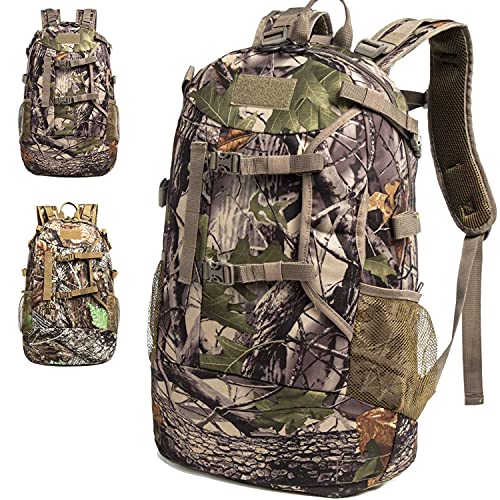
The best hunting backpacks for gear and meat hauling are framed packs with a load shelf, adjustable torso fit, quiet-enough materials, and roughly 4,000–6,000 cubic inches of usable capacity; the right choice depends on whether you prioritize day-hunt speed, extended backcountry storage, or repeated heavy pack-outs.
Our top picks



As an Amazon Associate we earn from qualifying purchases at no extra cost to you. Ratings are shown as listed on Amazon.
Best hunting backpacks by situation
| Hunting situation | Best pack type | Useful capacity | What matters most |
|---|---|---|---|
| Day hunts with occasional pack-outs | 4,000–5,000 cubic-inch external-frame pack | 65–82 liters | Low weight, quiet access, simple meat shelf |
| Three- to five-day backcountry hunts | 5,000–6,000 cubic-inch modular frame pack | 82–98 liters | Compression, removable day bag, load transfer |
| Frequent elk or moose pack-outs | Heavy-duty load-hauling frame | 80–100 liters | Rigid frame, substantial hip belt, 100-pound-plus capability |
| Budget-conscious occasional hunter | Internal-frame pack with integrated shelf | 55–75 liters | Repairable materials and a usable warranty |
Top choices for 2026
Mystery Ranch Metcalf: the balanced all-around option
The Mystery Ranch Metcalf is a strong choice when one pack must cover day hunts, overnight trips, and occasional heavy meat hauls. Its Guide Light MT frame transfers weight effectively to the hips, while the expandable load shelf separates meat from the main compartment. The 71-liter capacity is large enough for a serious overnight load without feeling like an expedition duffel on a short hunt.
The pack uses a relatively structured design rather than an ultralight minimalist layout. That adds weight—roughly 6 pounds, depending on configuration—but makes the pack easier to control when a quarter or boned-out meat bag is attached. Its fabric is not the quietest available for close-range archery, so it is better suited to spot-and-stalk, rifle, and mixed-use hunting than to extremely slow still-hunting in dry brush.
Stone Glacier Sky 5900: best for extended backcountry hunts
The Stone Glacier Sky 5900 offers about 96 liters of capacity and is designed around a lightweight frame-and-bag system. It is appealing for hunters carrying shelter, food, optics, clothing, and emergency equipment deep into the backcountry, then bringing meat out in stages.
Its large bag compresses well for smaller loads, but a pack this size can encourage overpacking. The practical advantage is not simply the maximum volume; it is the ability to carry bulky insulation, a stove, and several days of food without strapping everything to the outside. The modular architecture also allows a smaller bag or day-hunt configuration, although the complete system is a significant investment, commonly falling in the roughly $600–$900 market range depending on frame, bag, and accessories.
Exo Mountain Gear K4 5000: best modular middle ground
The K4 5000 sits between a compact day pack and a full expedition hauler. Its approximately 82-liter bag provides enough room for multi-day hunts, while the K4 frame is built around load transfer and modular accessories. A meat shelf can hold a game bag between the frame and pack body, keeping the center of gravity close to the wearer.
This type of pack works especially well for hunters who want one frame but may change bags or add a smaller day-hunting setup. The tradeoff is cost and complexity: modular straps, pockets, and accessories improve flexibility but add more adjustment points and more components to inspect before a trip.
KUIU PRO LT 4000: best when weight and compactness come first
The KUIU PRO LT 4000 is aimed at hunters who spend most of their time carrying a day load and want a lighter, more compact system for a meat return. With roughly 66 liters of capacity, it is less forgiving than a 5,000- or 6,000-cubic-inch pack for long trips, but its smaller profile is easier to manage through timber and steep terrain.
A pack in this class makes sense when food and shelter are compact, resupply is possible, or the hunter prefers a dedicated day bag. It is not the first choice for carrying a large camp plus a full animal in one load. Check the frame size and hip-belt range carefully, because lighter systems are less tolerant of poor fit and sloppy load placement.
Head-to-head: what separates good meat haulers from ordinary packs?
| Feature | Lightweight modular pack | Heavy-duty framed pack | Why it matters |
|---|---|---|---|
| Typical empty weight | 4–5.5 pounds | 5.5–7.5 pounds | The lighter pack saves energy before the animal is loaded. |
| Comfortable hunting load | 40–80 pounds | 60–100+ pounds | Frame stiffness and hip-belt structure become more important as weight rises. |
| Common fabrics | 200D–500D nylon or composite panels | 400D–1,000D nylon | Lighter fabric reduces weight; heavier fabric tolerates abrasion better. |
| Meat shelf | Often removable or accessory-based | Usually integrated into the frame system | An integrated shelf is faster to deploy and usually more stable. |
| Noise level | Depends heavily on zippers and fabric tension | Often slightly louder because of heavier fabric and hardware | Fabric choice matters, but loose buckles can be just as noisy. |
How much capacity do you actually need?
Pack capacity is commonly listed in cubic inches, while outdoor brands increasingly use liters. Divide cubic inches by 61 to estimate liters: a 4,000-cubic-inch pack is about 66 liters, 5,000 cubic inches is about 82 liters, and 6,000 cubic inches is about 98 liters.
For a two-night hunt, a practical load might include 18 liters of shelter and sleep equipment, 12 liters of clothing, 10 liters of food, 8 liters of cooking and water equipment, and 8 liters for optics, kill kit, and miscellaneous gear. That totals 56 liters before allowing room for awkward items. A 4,000-cubic-inch pack can handle it if the equipment is compact; a 5,000-cubic-inch pack gives more flexibility.
Do not count the meat shelf as ordinary internal capacity. The shelf is external carrying space, and its usable size depends on the frame, compression straps, and shape of the load. A shelf that accepts a 40-pound boned-out bag may not safely accommodate a bulky bone-in quarter.
Fit is more important than camouflage
Measure torso length from the prominent vertebra at the base of the neck to the top of the hip bones, then compare that measurement with the manufacturer’s frame range. Put approximately 20–30 pounds in the pack during fitting. The hip belt should sit over the upper hip bones, the shoulder straps should contact the body without carrying most of the weight, and the load lifters should angle upward toward the frame without pulling the shoulder straps away from the chest.
- Start with the hip belt loose, place the pack on your back, and tighten the belt first.
- Tighten the shoulder straps until the pack is close to the body.
- Pull the load lifters just enough to stabilize the upper pack.
- Use the sternum strap to control shoulder-strap movement, not to support the load.
- Walk uphill and downhill with a test load before hunting season.
A frame that fits poorly can make a 50-pound load feel worse than a correctly fitted frame carrying considerably more. If you are between sizes, check whether the manufacturer offers adjustable torso length or interchangeable hip belts.
Quiet fabrics and camouflage choices
Soft brushed faces and fleece-like panels are usually quieter than crinkly laminate or stiff coated nylon, particularly when moving through close vegetation. The compromise is durability: soft surfaces can collect burrs, absorb moisture, and show abrasion sooner. Heavier woven nylon is often louder at first touch but more resistant to dragging against rock.
Camouflage is useful when the pack may be visible near a concealed hunter, but pattern selection should not outweigh fit or load support. A solid earth-tone pack can be perfectly practical for most backcountry travel, especially when the pack is covered by a rain cover or placed behind terrain. If you hunt open country and leave a pack near a glassing position, muted colors reduce visual contrast without requiring a full camouflage system.
Ownership realities: what wears out first?
- Hip-belt foam and stitching: Heavy loads compress foam and stress the belt attachment points. Inspect these areas before every season.
- Zippers: Dirt and dried mud cause more failures than normal use. Brush them clean and avoid forcing an overstuffed compartment.
- Stretch pockets: Mesh and elastic panels commonly snag on deadfall. Keep sharp tools inside the pack or in a protected pouch.
- Load-shelf straps: These may rub against meat bags, frame edges, or rough ground. Replace worn straps before a remote hunt.
- Odor and blood: Remove meat bags promptly, rinse contaminated areas with cool water, and follow the manufacturer’s cleaning instructions. Avoid storing the pack damp.
Do not machine-wash a framed pack unless the manufacturer specifically permits it. Remove the frame and accessories where possible, spot-clean with mild soap, rinse thoroughly, and air-dry away from direct heat. Heat can damage foam, coatings, and adhesives.
Bottom line
Choose the Mystery Ranch Metcalf for a versatile all-around pack, the Stone Glacier Sky 5900 for high-capacity backcountry missions, the Exo Mountain Gear K4 5000 for a modular middle ground, and the KUIU PRO LT 4000 for lighter day-hunt systems. Whichever model you choose, prioritize a correctly sized frame, a real meat shelf, usable compression, and materials quiet enough for your hunting style. A pack that fits your torso and keeps a heavy load close will usually outperform a lighter or better-camouflaged pack that does neither.




Write Your Review
No reviews yet. Be the first to share your experience!