

Key takeaways
- After a muddy hike, remove the insoles and rinse dirt from the outsole with cool water.
- Brush mesh gently and wipe leather with a damp cloth; avoid harsh detergent.
- Dry shoes at room temperature with the tongue opened. Do not place them on a radiator or use high heat.
- Reapply a suitable water-repellent treatment when water stops beading on a non-membrane upper.
- Replace shoes when tread is visibly rounded, the midsole feels permanently compressed, or the upper can no longer hold the heel securely.
The best hiking shoes for lightweight trail comfort are the Salomon X Ultra 4 GTX for wet, technical day hikes, the Hoka Speedgoat 6 for cushioned fastpacking, the Altra Lone Peak 9 for a roomy toe box and flexible trail feel, and the Merrell Moab 3 for affordable mixed-surface walking.
There is no single best hiking shoe for every trail. The right choice depends on how much grip and protection you need, whether your feet run hot or wet, how much weight you carry, and whether you prefer a precise fit or generous forefoot space.
Our top picks



As an Amazon Associate we earn from qualifying purchases at no extra cost to you. Ratings are shown as listed on Amazon.
Best hiking shoes by use case
| Use case | Best choice | Why it fits | Main compromise |
|---|---|---|---|
| Wet, rocky day hikes | Salomon X Ultra 4 GTX | Contagrip outsole, waterproof membrane, stable chassis and protective toe cap | Less breathable and less flexible than a mesh trail runner |
| Fastpacking with a light pack | Hoka Speedgoat 6 | High cushioning, Vibram Megagrip rubber and aggressive lugs | Higher stack feels less connected to the ground |
| Wide feet and natural flexibility | Altra Lone Peak 9 | FootShape toe box, zero-drop platform and flexible trail construction | Less structured support and water protection |
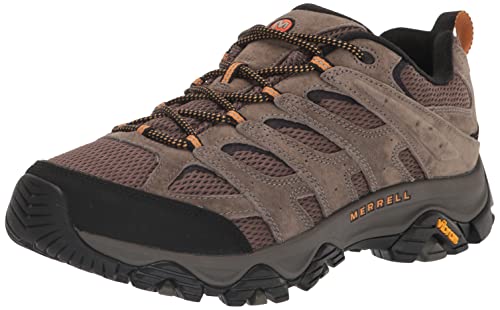
| Budget-friendly mixed surfaces | Merrell Moab 3 | Durable leather-and-mesh upper, moderate cushioning and dependable traction | Heavier and less agile for fast hiking |
Weights in the table are approximate manufacturer-listed weights for a men’s pair near US size 9; actual weight changes with size, width and version.
Head-to-head comparison
| Model | Approx. pair weight | Outsole and lug approach | Waterproofing | Ride and flexibility | Fit notes |
|---|---|---|---|---|---|
| Salomon X Ultra 4 GTX | About 790 g | Contagrip All Terrain, approximately 4.5 mm lugs | GORE-TEX membrane | Moderately cushioned, torsionally stable, medium flexibility | Secure midfoot; usually a snugger performance fit |
| Hoka Speedgoat 6 | About 600 g | Vibram Megagrip, approximately 5 mm lugs | Usually non-waterproof mesh | Plush cushioning, rocker, flexible forefoot | Secure heel with more forefoot volume than many road shoes |
| Altra Lone Peak 9 | About 650 g | MaxTrac rubber, approximately 4 mm lugs | Non-waterproof mesh | Very flexible, zero-drop, moderate cushioning | Roomy toe box; zero-drop geometry requires a gradual transition |
| Merrell Moab 3 | About 900 g | Rubber outsole, approximately 5 mm lugs | Available in waterproof and non-waterproof versions | Stable, moderately cushioned, comparatively firm | Relaxed fit; wide versions are available |
How the leading choices differ
Salomon X Ultra 4 GTX: the technical day-hike option
The X Ultra 4 GTX is the strongest all-round pick when trails combine mud, wet rock, roots and uneven descents. Its outsole offers a useful balance of climbing and braking traction, while the structured sole and reinforced upper help keep the foot aligned on side slopes. A waterproof GORE-TEX version is practical for shallow puddles, wet grass and short rain showers.
The cost is breathability. Once water enters over the collar, a waterproof shoe can take longer to dry than mesh footwear. The relatively structured construction also feels less natural on smooth paths. Choose it when protection and wet-weather reliability matter more than minimum weight.
Hoka Speedgoat 6: the cushioned fastpacking choice
The Speedgoat 6 is better suited to long days and fastpacking when reducing foot fatigue matters. Its thick foam platform softens repeated impact, and the rocker encourages a quick stride on dirt roads and rolling singletrack. Vibram Megagrip rubber and deep lugs perform particularly well on loose soil, wet roots and rough rock.
It is not a waterproof hiking shoe, and its high stack can feel less precise when edging across narrow, sloping ground. The generous cushioning also takes up more space in a pack than a low-profile approach shoe. Pick it for distance, speed and comfort rather than maximum ground feedback.
Altra Lone Peak 9: the flexible, wide-toe-box choice
The Lone Peak 9 is a strong option for hikers who dislike compressed toes. Its FootShape forefoot leaves room for toes to spread, while the flexible platform bends easily over uneven ground. That combination suits day hikes, warm-weather fastpacking and mixed trails where a natural, low-restriction feel is more valuable than rigid support.
The zero-drop platform places the heel and forefoot at a similar height. If you normally wear shoes with a raised heel, increase distance gradually instead of switching immediately for a full-day hike. The mesh upper also dries faster than waterproof footwear but offers less protection in cold rain and wet vegetation.
Merrell Moab 3: the durable value choice
The Moab 3 remains appealing for hikers who want a conventional hiking-shoe fit, a durable upper and a moderate price. Its leather-and-mesh construction protects against abrasion better than many lightweight runners, and the sole is suitable for gravel, forest paths and moderate rocky terrain.
It is noticeably heavier than the trail-running alternatives. That weight is not a problem for relaxed day hikes, but it becomes more noticeable during fastpacking or long climbs. The waterproof version is useful in cool, damp conditions; the ventilated version is preferable in hot weather.
Decision matrix: match the shoe to your hiking pattern
| Your situation | Priority | Recommended type or model | What to avoid |
|---|---|---|---|
| First pair, occasional hikes, limited budget | Forgiving fit and durability | Merrell Moab 3 | Highly specialized racing shoes |
| Weekly day hikes on wet, technical trails | Grip, stability and toe protection | Salomon X Ultra 4 GTX | Minimal mesh shoes with shallow lugs |
| Fastpacking or 20-plus-mile days | Low weight and cushioning | Hoka Speedgoat 6 | Heavy leather shoes unless abrasion protection is essential |
| Wide forefoot or frequent toe contact | Forefoot room and flexibility | Altra Lone Peak 9, after a gradual transition | Narrow, tapered toe boxes |
| Mostly dry trails and road-to-trail routes | Breathability and quick drying | Non-waterproof Speedgoat 6 or Lone Peak 9 | Waterproof membranes in consistently hot conditions |
How to choose grip, cushioning and protection
Trail grip: Lugs around 4 to 5 mm are a useful middle ground for mixed surfaces. Shallow, closely spaced lugs roll smoothly on pavement but can clog or slip in mud. Deep, widely spaced lugs bite better on soft ground but feel less efficient on firm paths. Rubber compound matters as much as lug depth: sticky rubber grips rock well but may wear faster.
Cushioning: More foam helps on long distances and hard-packed trails, especially with a loaded daypack. Less foam improves ground feel and can make precise foot placement easier. Cushioning cannot replace a secure heel or a suitable fit.
Waterproofing: A membrane blocks external water until it enters over the collar, but it also slows evaporation. Choose waterproof shoes for frequent rain, wet grass and cool conditions. Choose mesh for hot climates, stream crossings where you can accept wet feet, and trips where drying speed matters.
Toe protection: A rubber toe cap is valuable on rocky trails and when carrying a heavier pack. It adds modest weight but can prevent repeated knocks from becoming a reason to shorten a hike. Soft mesh is lighter but offers little protection against direct impact.
Fit and sizing: a practical check
Try hiking shoes late in the day, when feet are often slightly larger, while wearing the socks you plan to use. Leave roughly a thumb’s width between the longest toe and the front of the shoe. On a downhill simulation, your toes should not touch the front; on an uphill simulation, your heel should not lift excessively.
Use the lacing to secure the midfoot without crushing the forefoot. If the heel slips while the toe box already feels short, do not solve the problem by sizing down. Try a different heel shape or use a heel-lock lacing pattern. Compare both feet, because length and volume commonly differ between them.
Ownership realities and maintenance
The outsole usually loses useful traction before the upper looks worn, particularly when shoes are used on pavement. Mesh can develop holes at flex points, while leather creases and may separate near the toe cap if repeatedly soaked and dried beside high heat. Insoles compress over time and can change the feel before the outsole is visibly damaged.
- After a muddy hike, remove the insoles and rinse dirt from the outsole with cool water.
- Brush mesh gently and wipe leather with a damp cloth; avoid harsh detergent.
- Dry shoes at room temperature with the tongue opened. Do not place them on a radiator or use high heat.
- Reapply a suitable water-repellent treatment when water stops beading on a non-membrane upper.
- Replace shoes when tread is visibly rounded, the midsole feels permanently compressed, or the upper can no longer hold the heel securely.
For example, a $140 pair used for 40 hikes costs $3.50 per hike. Used for only 15 outings, the same pair costs $9.33 per hike. A slightly more durable shoe can therefore be better value for frequent hikers, while a lightweight mesh model may be the smarter choice for occasional trips where comfort and drying speed matter most.
Bottom line
Choose the Salomon X Ultra 4 GTX for wet technical day hikes, the Hoka Speedgoat 6 for cushioned distance and fastpacking, the Altra Lone Peak 9 for a flexible wide-toe-box fit, and the Merrell Moab 3 for durable, budget-conscious mixed-surface hiking. Prioritize fit first, then match grip, waterproofing and cushioning to the surfaces and distances you actually hike in 2026.






Write Your Review
No reviews yet. Be the first to share your experience!