

Key takeaways
- Compare the best terminal release tools for electrical connectors by piece count, tang style and Weather Pack, Metri-Pack and Deutsch coverage.
As an Amazon Associate we earn from qualifying purchases.
Every crimped terminal inside a wiring connector is held in place by a locking tang: a small spring tab stamped into the terminal that clicks against a shoulder inside the plastic housing and stops the pin from backing out. A terminal release tool is the blade, fork or thin-walled tube that slides into the housing, folds that tang flat, and lets the wire pull out the back with the terminal undamaged. It is the difference between re-pinning a connector in minutes and destroying a housing with a jeweler’s screwdriver, a sewing needle or a pick — the usual improvised substitutes, which work just often enough to build habits that crack housings and fold tangs flat for good.
Two things decide whether a given tool works on a given plug. The first is tang geometry: some terminals carry a single tang on one face, some carry two, and round sealed-connector terminals are held by tangs that must be collapsed evenly from all sides, which is why they need a tube that surrounds the terminal rather than a flat blade. The second is release direction. Front-release tools enter from the mating face, alongside the terminal; rear-release tools enter from the wire side, usually after a secondary lock or wedge is lifted out. A kit’s piece count tells you little about either. What matters is whether it names the connector families it serves — Weather Pack, Metri-Pack, Deutsch, Molex-style — and whether its shapes match the tangs in the plugs you own.
That leads to the honest limitation of this tool class: no kit covers every OEM connector. Aptiv (the former Delphi), TE Connectivity and its Deutsch line, Molex, Yazaki, Sumitomo and Bosch all use their own tang geometry, and one vehicle harness mixes suppliers freely. Experienced technicians therefore buy by tang style and terminal size, not by the badge on the car. The five kits below are compared on exactly those terms: piece count, the connector families each one genuinely covers, and how its tools are built.
Affiliate Disclosure: This article contains affiliate links. If you buy through these links, we may earn a commission at no additional cost to you. This helps support our work and allows us to continue providing detailed tool guides.
What to Look for in Terminal Release Tools
Match the tang style before anything else. Flat blade tools suit rectangular terminals with a single exposed tang. Twin-blade and fork tools handle terminals locked by tangs on two faces. Round terminals in sealed connectors — Weather Pack, Metri-Pack, Deutsch DT and DTM — need casing tools: thin tubes that slip over the wire and around the terminal, pressing every tang flat at once. A blade forced into a round-terminal housing usually bends one tang and leaves the others locked.
Know your release direction. Sealed connectors from Aptiv and Deutsch are typically serviced from the rear once the wedge lock comes out, while many unsealed Molex-style and OEM sensor plugs release from the front. A kit of front-entry blades alone will not help on a rear-release housing, however many pieces it contains.
Piece count is not coverage. Large generic kits reach their counts by sizing three basic shapes — single blade, double blade and tube — across many near-identical sizes, with some duplicates in the tray. That spread is useful on unknown connectors, but a small specialist kit machined to named connector families will release those families faster and with less housing damage. Decide whether your work is mostly one connector system or a bit of everything.
Build quality shows at the tip. Release tools work by springing a steel tang, and the tool itself flexes on every use. Thin stamped blades in budget kits bend and snap, sometimes inside the housing. Stainless tubes and machined, hardened tips survive repeated use; soft stamped forks are occasional-use tools.
Handles and identification matter in a crowded engine bay. Knurled or color-coded handles help you grab the right gauge size without reading markings, and a slip-on handle over a bare probe protects your palm when a tang is stiff. Molded cases keep a kit complete; loose bags of keys slowly lose the one size you need.
The 5 Best Terminal Release Tools
1. Lisle 57750 Wire Terminal Tool Kit

The Lisle 57750 is the long-running professional answer for the legacy North American connectors that still fill engine bays on older trucks, farm equipment and project vehicles. It is a small kit with a narrow, deliberate brief: three terminal tools plus a slip-on handle, in a molded case. The 14900 tool is built for GM Pack-Con and Weather Pack terminals on GM C3 systems, its prongs depressing the tangs so the wire backs out cleanly. The 56500 is the general wire terminal tool for conventional terminals, and the blue 57780 tool fits many Ford applications. The 57790 handle slips over whichever probe is in use, protecting the technician’s hand and adding leverage on stiff tangs.
What the 57750 does not pretend to do is cover modern sealed metric connectors or Deutsch plugs — its coverage ends where its three named applications end, and Lisle sells every piece individually when one wears or wanders off. For a shop that services older GM and Ford wiring regularly, that focus is the point: each tool is shaped for a specific tang rather than sized approximately for many. The tools are alloy steel and the kit weighs 11.2 ounces.
Specs
- Contents: 3 terminal tools (14900, 56500, 57780) plus 57790 slip-on handle
- Connector coverage: GM Pack-Con and Weather Pack (C3 systems), conventional terminals, many Ford applications
- Material: alloy steel
- Storage: molded case
- Kit weight: 11.2 oz
- Model: Lisle 57750
2. S&G Tool Aid 18700 Master Terminals Service Kit

Tool Aid’s 18700 takes the opposite approach to the Lisle: it is a complete service kit for sealed connectors, pairing six release tools with five crimping tools in one molded case, so a damaged Deutsch or Weather Pack terminal can be released, cut off and re-crimped without leaving the bench. The release half is Deutsch-heavy, as sealed-connector work tends to be: dedicated tools cover Deutsch terminals on 14-16, 16-18 and 20-24 gage wire, a larger tool handles 8 and 10 gage, another covers heavy 6 gage terminals, and a sixth releases Weather Pack terminals. The release tools use stainless steel shafts with knurled, color-coded aluminum handles, identifiable by feel.
The crimping half covers Deutsch closed-barrel terminals in 12 gage, 14/16/18 gage and 20/22 gage, plus an open-barrel crimper for 14-24 gage wire and a crimper for Weather Pack and Metri-Pack terminals; coverage extends to Deutsch-compatible Amphenol AT and AHD series terminals. At 6.1 pounds in its case this is a bench kit, not a glovebox kit, and buyers who only ever release pins will carry crimpers they do not use. But for anyone maintaining trucks, agricultural or marine equipment — the sealed, vibration-prone world this kit was designed for — it is the most complete single purchase here.
Specs
- Contents: 11 pieces — 6 terminal release tools and 5 crimping tools
- Release coverage: Deutsch terminals for 6, 8 and 10, 14-16, 16-18 and 20-24 gage wire; Weather Pack terminals
- Crimp coverage: Deutsch closed-barrel 12, 14/16/18 and 20/22 gage; open-barrel 14-24 gage; Weather Pack and Metri-Pack
- Handles: knurled, color-coded aluminum with stainless steel shafts
- Storage: molded plastic case
- Kit weight: 6.1 lb
- Model: Tool Aid 18700
3. JRready ST5211 Pin Removal Tool Kit

JRready built its name on tools patterned after the original equipment removal tools for Aptiv sealed connectors, and the ST5211 is its focused kit for the Weather Pack and Metri-Pack world. Rather than dozens of approximate keys, the kit bundles dedicated removal tools for the connector families named on the box: a Weather Pack removal tool (DRK-DWP01), Metri-Pack 280 series (DRK-DMP280) and Metri-Pack 630 series (DRK-DMP630) tools, plus a DRK 785084 removal tool for AMP 1.5 mm terminals. These are the tube-and-plunger style tools that slide over the wire, seat against the terminal and collapse the tangs evenly, which is exactly what round sealed terminals require.
The listing describes an aluminum-bodied kit weighing 7.7 ounces, sized for a toolbox drawer rather than a bench case. Because the tools correspond to specific DRK removal-tool designs, fit on the named families is precise in a way generic keys rarely are — the trade-off being that the kit says nothing about Deutsch, Molex or European OEM connectors. For GM-era and aftermarket harness work built on Weather Pack and Metri-Pack connectors, it is the specialist pick.
Specs
- Contents: removal tools DRK-DWP01, DRK-DMP280, DRK-DMP630 and DRK 785084
- Connector coverage: Weather Pack; Metri-Pack 280 and 630 series; AMP 1.5 mm terminals
- Material: aluminum
- Kit weight: 7.7 oz
- Model: JRready ST5211
4. Lisle 59600 Deutsch Terminal Tool

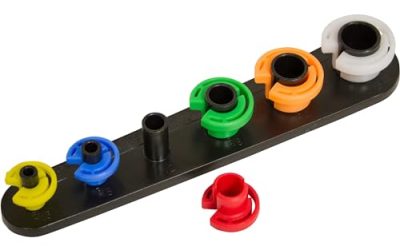
The 59600 is a single-purpose tool for a single connector family, and it earns its place because that family — Deutsch — dominates heavy trucks and equipment. One handle carries three sizes of slotted tubes; you slide the tube that matches the terminal over the wire, push it into the connector grommet until it bottoms out on the terminal, and pull the wire free. Lisle is explicit about technique: the tool is not twisted, because twisting a slotted tube against a terminal damages both. The tubes are stainless steel, which Lisle points out lasts longer than the plastic disconnect tools sometimes sold for the same job.
Its stated applications are the OEM electrical connectors used on Caterpillar, Kenworth, Peterbilt, Freightliner and Mack trucks and equipment, along with some Harley-Davidson connectors. At a tenth of a pound it disappears into a service truck’s electrical drawer. The limitation mirrors its strength: it does nothing for Weather Pack, Metri-Pack or any unsealed connector, and three tube sizes cannot span every Deutsch contact size ever fitted. Technicians who live on Deutsch plugs often own this alongside a gage-ranged set like the Tool Aid above; those who rarely meet a Deutsch connector do not need it at all.
Specs
- Contents: 1 tool with 3 slotted tube sizes
- Connector coverage: Deutsch terminals in OEM truck and equipment connectors (Caterpillar, Kenworth, Peterbilt, Freightliner, Mack; some Harley-Davidson)
- Tube material: stainless steel; handle: plastic
- Kit weight: 0.1 lb
- Model: Lisle 59600
5. Kikerike 82-Piece Terminal Removal Tool Kit

The Kikerike kit is the broad-net option: 82 pieces in a protective case — 28 single pin extractors, 30 double pin extractors and 24 casing tools. That mix covers the three fundamental tang situations — one tang, two tangs, and round terminals needing a tube — across a wide spread of sizes, making it the kit most likely to contain something that fits an unfamiliar connector on a car, trailer or household appliance. The tools pair stainless tips with plastic handles.
The honest caveats belong with any kit in this format. The count includes closely spaced sizes of the same three shapes rather than 82 distinct solutions, the stamped tips are thinner than the machined tools in the JRready and Lisle kits and can bend on a stubborn tang, and no connector families are named — you match shapes by eye and by trial, gently. Used that way, as a coverage kit for varied work rather than a daily professional set, it does its job, and its spread of tube sizes is the widest in this group.
Specs
- Contents: 82 pieces — 28 single pin extractors, 30 double pin extractors, 24 casing tools, protective case
- Connector coverage: generic — single-tang, double-tang and round terminals across automotive and household connectors
- Material: stainless steel tips, plastic handles
- Storage: protective case
- Model: Kikerike TRTK
How to Release a Terminal Without Damaging It
The technique is the same whatever the kit. Disconnect the battery first — a released live terminal that brushes a ground can take out a fuse or worse. Open the connector and remove any secondary lock or wedge lock; many terminals that seem stuck are simply still behind theirs. Push the wire gently forward, toward the mating face, to unload the tang from its shoulder. Slide the correct tool in along the terminal — tube tools go over the wire from behind, blades enter beside the tang — until it seats. Hold the tool in place and pull the wire out the back with steady pressure; the terminal should slide, not tear.
If a terminal will not move, stop and change tools rather than adding force: a tang that stays locked usually means the blade is on the wrong face or the tube is one size off. Once the terminal is out, inspect the tang. A tang flattened during removal can be lifted back to its original angle with a small pick so it locks again on reassembly; a torn or creased tang should be replaced, because it will not hold in the housing.
More from Amazon
Programs that pair well with the guide above. Offers and eligibility are set by Amazon and may change.
Free shipping on eligible items, Prime Video and more. Eligible new members can start with a free trial.
Start a Prime free trialA Prime membership for ages 18-24 with a trial period. Eligibility is set by Amazon.
See Prime for Young AdultsAudiobooks and podcasts to listen to on the go. Eligible new members can start with a free trial.
Try Audible freeAd-free music streaming. Eligible new subscribers can start with a free trial.
Try Music Unlimited freeAs an Amazon Associate we earn from qualifying purchases.

Write Your Review
No reviews yet. Be the first to share your experience!