
Our Short List of 3

- Best for: A mixed-brand household that wants one engineered tent for an open frame machine.
- Fit: Open frame portable generators, universal clamp system
- Part number: GTOPFUASTN
- Canopy: Waterproof, NFPA flame retardant per listing
- Mounting: Self-attaching clamps on frame posts, no tools

- Best for: Large open frame generators that run for long stretches in wind-driven rain or snow.
- Fit: Most generators from 3500W to 12,000W per listing
- Size: 33 x 25.5 x 18.5 inches (listing dimensions)
- Frame: Stainless steel pipes, 5/8 inch diameter
- Included: Windproof kit with 4 tent stakes and ropes (Pro-Max)
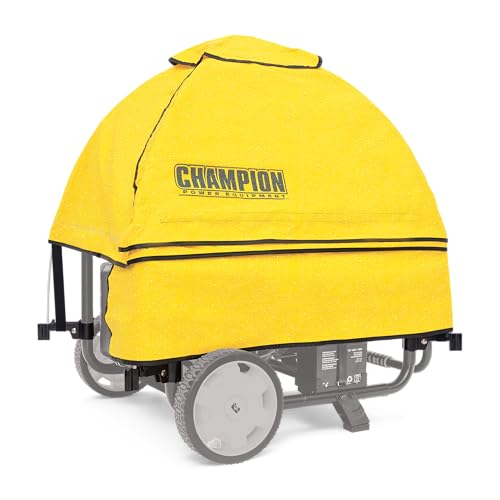
- Best for: Champion open frame owners who want a cover fitted to their exact model range.
- Fit: Champion open frame generators, 4000 to 12,500 starting watts
- Model number: 100376
- Maker: Champion Power Equipment, cover by GenTent
- Weather figures in listing material: Up to 70 mph winds, up to 18 inches of snow
All 4 Picks at a Glance
| Product | Specs | Action |
|---|---|---|
| GenTent Open Frame Generator Tent, Universal Kit |
| Check price on Amazon |
| IGAN Generator Cover While Running Pro-Max |
| Check price on Amazon |
| Champion Storm Shield 100376 by GenTent |
| Check price on Amazon |
 Westinghouse WGenTent Running Cover |
| Check price on Amazon |
Key takeaways
- Running covers that let a generator operate in rain and snow: vented tents for open frame and inverter models, fit checks, and carbon monoxide safety.
A running cover exists to solve one uncomfortable problem: generators must live outdoors, away from the house, exactly where the rain and snow are. The real decision is not fabric or color — it is whether the cover is genuinely engineered to be on the machine while it runs, with airflow for cooling and combustion, a way to refuel, and access to the electrical panel. A storage cover does the opposite job, sealing a cold, parked generator, and confusing the two is dangerous.
This guide is for homeowners who run a portable generator through storm outages, campers and tailgaters whose inverter works in open weather, and anyone replacing a tarp-and-bungee arrangement that never quite worked. The five covers below were picked from their Amazon listings, using the fit ranges, frame systems, and weather ratings each listing itself states, and every one is sold as a cover for a running generator.
Quick Picks
As an Amazon Associate we earn from qualifying purchases at no extra cost to you.
| Product | Best for | Key spec from title |
|---|---|---|
| GenTent Open Frame Generator Tent, Universal Kit | Open frame generators of many brands | Clamp-on frame kit, NFPA flame retardant canopy per listing |
| IGAN Generator Cover While Running Pro-Max | Large open frame machines in harsh weather | Fits most 3500W to 12000W generators, stainless frame, windproof kit |
| Champion Storm Shield 100376 by GenTent | Champion open frame generators | Sized for 4000 to 12,500 starting watt Champion models |
| GenTent Inverter Running Cover Kit | Fully encased inverter generators | Strap-mount kit for 1000W to 9500W inverters per listing |
| Westinghouse WGenTent Running Cover | Westinghouse open frame generators | Vented top, refueling door, fits up to 11500 series per listing |
How to Choose
Confirm it is a running cover, not a storage cover
This distinction decides everything else on this page. A running cover is a tent: it stands off the machine on a frame, leaves the intake and exhaust paths open, keeps the panel reachable, and usually adds a refueling door. A storage cover is a fitted bag that slips over a shut-down generator to keep dust off it in the garage. Listings for true running covers say so in plain terms — operating, while running, for use in wet weather — and describe ventilation. If a listing only talks about storage, dust, and UV, it is the wrong product for a storm outage.
Match the kit to your frame type
Mounting systems follow the shape of the generator. Open frame machines give a cover something to clamp to: tubular steel posts that accept clamp kits like the GenTent Universal or the IGAN’s frame rails. Fully encased inverter generators have no posts, so they use strap systems that hug the case itself, like the GenTent Inverter Kit. Brand-matched covers, such as the Champion and Westinghouse entries here, are pre-sized around their own model ranges. Measure your frame’s perimeter and height, then compare against the fit range in the listing — close is not close enough when clamps and handles compete for the same posts.
Check that controls stay usable under cover
A cover you have to remove to refuel is a cover that fails at hour six of an outage. Look for a refueling door or lift-off top section, an apron or opening that keeps the electrical panel dry while leaving outlets reachable, and clearance for the recoil starter and carry handles. Walk through your own routine mentally: start the machine, plug in the cord, check the panel mid-run, refuel in the dark. Each step should be possible with the cover fitted, in gloves, without dismantling the frame.
Read weather ratings as limits, not promises
Good listings state numbers: wind speed, rainfall per hour, snow load. The GenTent and Champion covers below cite figures such as 70 mph forecast winds and up to 18 inches of snow load in their listing text. Treat those as engineered ceilings under correct installation, not as invitations to run a generator in a hurricane. Ratings also assume the frame is clamped or strapped exactly as instructed, on a level surface, with flaps and aprons positioned as designed. A sloppy install quietly cancels the engineering.
Safety Notes
Never put a storage cover, tarp, or blanket over a generator while it runs — a running-rated, ventilated tent is the only cover designed for an operating machine, and even then the generator stays outdoors, at least 20 feet from windows, doors, and vents, exhaust pointed away, because carbon monoxide kills without smell or warning. Keep the exhaust path and cooling airflow completely unobstructed, brush snow off the canopy before it accumulates past the maker’s stated load, and let the machine cool fully before removing the cover or refueling.
The 5 Best Options
GenTent Open Frame Generator Tent, Universal Kit
- Best for: A mixed-brand household that wants one engineered tent for an open frame machine.
- Fit: Open frame portable generators, universal clamp system
- Part number: GTOPFUASTN
- Canopy: Waterproof, NFPA flame retardant per listing
- Mounting: Self-attaching clamps on frame posts, no tools
A mixed-brand household that wants one engineered tent for an open frame machine.
Clamp placement can conflict with muffler heat shields or a low electrical panel on some frames; check your post layout against the kit before ordering.
The Universal Kit is the generalist of this group: a clamp system that grips the vertical posts of most open frame generators, fiberglass frame rods, and a waterproof canopy the listing describes as NFPA flame retardant, with independent testing cited for high winds, heavy rain, and snow load. Because it is brand-agnostic, it suits households whose next generator may be a different make than the current one, and the tool-free clamp, frame, cover sequence keeps installation quick when a storm is already close.
IGAN Generator Cover While Running Pro-Max
- Best for: Large open frame generators that run for long stretches in wind-driven rain or snow.
- Fit: Most generators from 3500W to 12,000W per listing
- Size: 33 x 25.5 x 18.5 inches (listing dimensions)
- Frame: Stainless steel pipes, 5/8 inch diameter
- Included: Windproof kit with 4 tent stakes and ropes (Pro-Max)
Large open frame generators that run for long stretches in wind-driven rain or snow.
Measure your machine’s top frame carefully — the stated wattage range is broad, but the physical footprint and handle layout decide the real fit.
IGAN takes a different route: a heavy tarpaulin cover carried on a stainless steel pipe frame that mounts to the top of the generator, with suspended flaps that hang open while running so air keeps moving and the panel stays dry. The Pro-Max version adds a windproof kit of stakes and ropes, and the listing sizes it for most generators from 3500 to 12,000 watts. With the flaps down it doubles as storage protection, which simplifies life in a small garage.
Champion Storm Shield 100376 by GenTent
- Best for: Champion open frame owners who want a cover fitted to their exact model range.
- Fit: Champion open frame generators, 4000 to 12,500 starting watts
- Model number: 100376
- Maker: Champion Power Equipment, cover by GenTent
- Weather figures in listing material: Up to 70 mph winds, up to 18 inches of snow
Champion open frame owners who want a cover fitted to their exact model range.
It is not a universal cover — other brands’ frames, and Champion’s own enclosed inverters, fall outside its intended fit.
Champion owners get the sized-for-you option: a Storm Shield built by GenTent specifically around Champion open frame generators from 4000 to 12,500 starting watts. The appeal is precision — clamps, apron, and canopy proportions drawn for one brand’s frames, with the same severe-weather brief as the universal tents, including wind and snow figures in the listing description. If your generator is a Champion in that range, this removes most of the measuring anxiety from the purchase.
GenTent Inverter Running Cover Kit
Encased inverters cannot take clamps, so this kit straps directly to the generator’s case, then builds the same fiberglass-rod tent above it. The listing rates the canopy as NFPA 701 flame retardant, waterproof with welded seams, and tested for severe wind, rain, and snow load, while the shape preserves the inverter’s own cooling profile. For campers and quiet-neighborhood users whose machine is a smooth plastic box rather than a steel cage, this is the running cover architecture that actually attaches.
Specs
- Fit: Fully encased inverter generators, 1000W to 9500W per listing
- ASIN field: B016MZ3VH0 in the listing’s product information
- Model number: GTOICSMSGR
- Mounting: Self-attaching strap system on the case, no tools
- Canopy: Flame retardant (NFPA 701) rated, waterproof, welded seams per listing
- Color shown: Grey (Standard)
Best for: Inverter owners who need weather protection without giving up the machine’s quiet, enclosed design.
Watch out for: Confirm your inverter’s case shape and handle placement against the strap layout; very compact models and top-handle designs can sit awkwardly under the frame.
ASIN: B016MZ3VH0
Westinghouse WGenTent Running Cover
- Best for: Westinghouse open frame owners who refuel often during long outages.
- Fit: Westinghouse open frame generators up to and including the 11500 series per listing
- Features: Vented top, refueling door
- Weather figures in listing summary: Up to 12 inches of rain per day, 18 inches of snow per day, winds up to 70 mph
- Warranty: 1 year per listing summary
Westinghouse open frame owners who refuel often during long outages.
The fit statement names Westinghouse models; owners of other brands should choose a universal kit instead of assuming cross-brand fit.
Westinghouse answers with its own tent for its open frame range, and two details stand out in the listing: a vented top that helps the generator keep its natural cooling airflow, and a refueling door that lifts open and braces against the side, so topping up does not mean stripping the cover in the rain. The listing extends the fit up to and including the 11500 series, and states weather tolerance figures in line with the other engineered tents here, backed by a stated one-year warranty.
Which One Fits Your Situation
A steel-frame generator runs your house in outages
Start with the GenTent Universal Kit if your machine is a mainstream open frame model, or the Champion Storm Shield if it is a Champion in range. Both keep the generator where it belongs — outside, at distance — while shedding the rain that would otherwise push you toward the garage. Measure the frame perimeter first; that single number settles which side of the choice you land on.
Your inverter powers camping and tailgates
The GenTent Inverter Kit is the natural fit, because it respects the enclosed case and the low-noise routine that made you buy an inverter in the first place. It packs around the machine without tools, keeps the panel dry during a drizzly setup, and lets the generator stay outside the tent line where its exhaust cannot reach sleeping areas.
Long outages mean refueling in bad weather
Look hardest at the Westinghouse WGenTent and the IGAN Pro-Max, whose listings both emphasize refueling access without removing the cover. On a multi-day outage you will refuel in the dark, in gloves, in whatever the sky is doing; a door that lifts and braces itself is worth more than any fabric specification on the page.
One cover has to handle running and storage
The IGAN Pro-Max is the honest dual-purpose pick: flaps up and ventilated while the generator works, flaps down as a heavy storage cover when it does not. That saves buying and storing two covers, provided you respect the discipline the design assumes — flaps open before startup, every time, without exception.
Common Mistakes
- Putting a fitted storage cover or a tarp over a generator while it is running, trapping heat and exhaust.
- Buying by wattage alone and never measuring the frame, so clamps land on a heat shield or the canopy fouls a handle.
- Setting the covered generator closer to the house because it looks sheltered, defeating the carbon monoxide distance.
- Leaving snow to pile on the canopy well past the maker’s stated load instead of brushing it off between checks.
- Skipping the dry run: first fitting the cover during the storm itself, in the dark, instead of on a calm weekend.
Frequently Asked Questions
Can I just use my storage cover with the flaps open?
No. A storage cover is a fitted bag with no frame, no engineered airflow path, and no refueling access; draping it loosely over a running machine still traps heat around the engine and can melt or obstruct the exhaust. Running covers hold their fabric away from the generator on a frame and are tested for that job. The two products look similar in a thumbnail and are opposites in use.
How far from the house should a covered generator sit?
The cover changes the weather exposure, not the placement rules. Keep the generator outdoors, at least 20 feet from the home per the guidance quoted in these listings, with the exhaust pointed away from windows, doors, and vents. A tent makes that distance comfortable by keeping the machine dry out there; it never makes a porch, garage, or carport acceptable.
Will a running cover make my generator quieter?
That is not what it is for, and you should not expect it. These tents are weather devices: they shed rain and snow and keep the panel dry. Any cover that genuinely muffled sound would also restrict the airflow the engine needs for cooling and combustion. If noise is the problem, distance and an inverter generator are the honest answers, not a thicker cover.
What should I verify the first time I fit the cover?
Work through the machine’s whole routine with the cover on: recoil or electric start access, outlet and cord clearance at the panel, refueling door operation, exhaust path completely clear, and handles or wheels still usable if you need to shift the unit. Then run the generator briefly and confirm nothing flaps against a hot surface. Ten calm minutes at home beats discovering a blocked starter mid-storm.
More from Amazon
Programs that pair well with the guide above. Offers and eligibility are set by Amazon and may change.
Free shipping on eligible items, Prime Video and more. Eligible new members can start with a free trial.
Start a Prime free trialA Prime membership for ages 18-24 with a trial period. Eligibility is set by Amazon.
See Prime for Young AdultsAudiobooks and podcasts to listen to on the go. Eligible new members can start with a free trial.
Try Audible freeAd-free music streaming. Eligible new subscribers can start with a free trial.
Try Music Unlimited freeAs an Amazon Associate we earn from qualifying purchases.

Write Your Review
No reviews yet. Be the first to share your experience!