

Key takeaways
- Compare the best insulated growlers for camp: pressurized CO2 models that hold carbonation, and plain vacuum growlers for beer, cold brew and kombucha.
As an Amazon Associate we earn from qualifying purchases.
A glass growler filled at a taproom starts losing its fight the moment it leaves the bar. Light gets in, the cap seal is a thin disc of cardboard or plastic, and every pour lets in oxygen while carbonation escapes. By the second night at camp, the beer inside is warm, flat and a little stale. An insulated growler in stainless steel fixes the temperature problem completely and the carbonation problem partly — and the difference between partly and fully is the single most important thing to understand before you buy one.
This guide splits the field into two camps. Plain vacuum growlers — the Stanley, Coleman and Hydro Flask below — are insulated bottles with good seals. They keep drinks cold for a full day or more, but they cannot replace lost CO2, so an opened fill of draft beer fades over a day or two of pouring. Pressurized growlers — the two GrowlerWerks uKeg models here — carry a small CO2 cartridge in the cap that keeps the headspace pressurized, so the last pint pours with the same fizz as the first, days later. Everything below is stainless steel, because glass has no place in a cooler that gets dragged over gravel, and every pick is in the 64 oz class except one 128 oz option for groups.
Affiliate Disclosure: This article contains affiliate links. If you buy through a link on this page, we may earn a commission at no extra cost to you.
1. Stanley Classic Easy-Pour Growler 64 oz — The Camp Classic
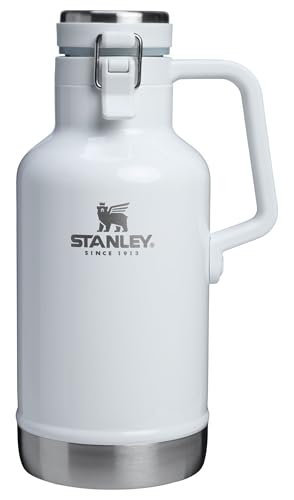
The Stanley is the growler most campers picture first, and it earns that status with the best lid in the plain-vacuum category. The hinged lid is foam-insulated and steel-lined, so your beer touches stainless steel rather than plastic, and it seals on a removable silicone gasket that actually holds pressure for a while. That gasket is why a fresh, unopened fill in the Stanley stays lively through a weekend: the seal is closer to a swing-top bottle than to a screw cap.
The vacuum-insulated body and insulated lid keep drinks cold for up to 24 hours by the maker’s rating, and hot drinks hot for up to 18 — realistic numbers for a shaded cooler or a cool evening, optimistic for a growler left on a sunny picnic table in August. The hinged design pours one-handed with the lid locked back, the handle is genuinely sturdy, and the whole thing is dishwasher safe, which matters more than it sounds after a trip (see the cleaning notes in How to Choose). The wide mouth also accepts a bottle brush without a fight.
Its limits are the limits of its class. Once you start pouring, each pint out is replaced by air, and carbonation drops noticeably by day two or three. It also pours like a jug, not a tap — fine for beer, clumsy for building a proper head in a small camp cup. For a Friday-to-Sunday trip where the growler gets emptied, none of that matters much. This is the default recommendation for most campsites.
Specs
- Capacity: 64 oz (1.9 L)
- Material: 18/8 stainless steel, BPA-free
- Insulation: Double-wall vacuum body, foam-insulated steel-lined lid
- Maker’s retention claims: Cold up to 24 hours, hot up to 18 hours
- Lid: Hinged flip lid, removable silicone gasket, carry handle
- Care: Dishwasher safe
2. GrowlerWerks uKeg Go 64 — Pressurized Fizz in a Portable Size
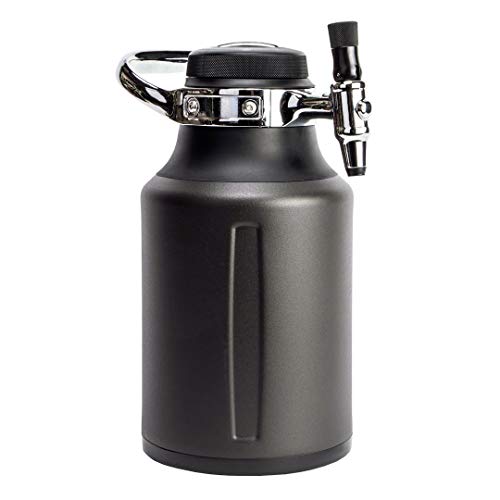
The uKeg Go is where carbonation stops being a countdown. A food-grade CO2 cartridge sits inside the cap and feeds gas into the headspace as you pour, holding the beer’s carbonation for weeks by the maker’s claim — in camp terms, a fill picked up on Thursday still pours properly on Sunday night, and the leftovers survive the drive home. It pours through a proper dispenser tap rather than an open mouth, which keeps oxygen out during serving and gives you something much closer to a draft pour.
The Go is the travel version of the uKeg concept: double-wall vacuum-insulated stainless steel, a simpler cap than its bigger sibling, and a size that fits in a cooler alongside actual food. It handles the full range of fizzy camp drinks — beer, cider, kombucha, sparkling water, even batched cocktails — and because the system is sealed and pressurized, it rides in a cooler without leaking.
The trade-offs are real. Cartridges are a consumable you must remember to pack, and a forgotten spare turns the Go back into a plain growler mid-trip. The tap, cap and cartridge housing need a proper rinse and occasional deep clean; dried beer in a tap line gets funky fast in warm weather. And a pressurized growler is heavier and more complex than a bottle. If your fills are usually finished the day they’re opened, that complexity buys you nothing. If you nurse a fill across a long weekend, it buys you the whole point of draft beer.
Specs
- Capacity: 64 oz
- Material: Stainless steel
- Insulation: Double-wall vacuum insulation
- Carbonation: CO2 cartridge system in cap (8 g food-grade cartridges)
- Pouring: Dispenser tap, sealed pressurized pour
- Maker’s claim: Keeps beverages carbonated and fresh for weeks
3. Coleman 64 oz Stainless Steel Insulated Growler — The Long-Cold Workhorse

Coleman’s growler makes the boldest temperature claims in this roundup: cold for up to 76 hours and hot for up to 41 hours from its double-wall vacuum-insulated 18/8 stainless body. Treat those numbers the way you should treat every retention claim — as best-case results from a pre-chilled, unopened vessel in mild conditions. In a real camp cooler opened six times a day, expect excellent performance across a long weekend rather than a literal three days of ice-cold beer. Even discounted, the Coleman is the thermal marathoner here.
It is a plain vacuum growler with a screw-on cap, which defines both its strengths and its ceiling. Strengths: nothing to break, no cartridges to buy, a textured grip that works with wet hands, and a body that shrugs off the dents-and-dings life of a truck bed. The screw cap seals well enough for transport, but it is the weakest carbonation keeper in this lineup — every opening vents the headspace entirely, and there is no gasket system on the Stanley’s level. Draft beer opened on Friday is noticeably softer by Saturday evening.
Where the Coleman shines is everything that is not draft beer: cold brew coffee for three mornings, iced tea, lemonade, kombucha you plan to drink still-ish, or a big batch of water that stays genuinely cold without a cooler full of ice. It is also the easiest shape to rinse out at a camp spigot. Buy it as a beverage tank, not as a keg substitute, and it will not disappoint you.
Specs
- Capacity: 64 oz
- Material: 18/8 stainless steel
- Insulation: Double-wall vacuum insulation
- Maker’s retention claims: Cold up to 76 hours, hot up to 41 hours
- Lid: Screw-on cap, textured grip body
- System: Plain vacuum growler, no CO2
4. GrowlerWerks uKeg 128 — A Gallon of Draft Beer for the Whole Camp
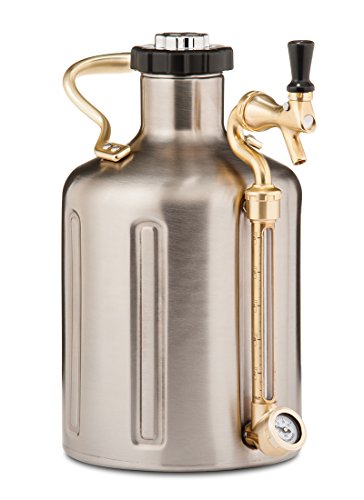
Everything the uKeg Go does, the original uKeg does with more control and twice the volume. The 128 oz capacity is a full gallon — eight pints — which changes the camp math: one fill serves a group for an evening instead of a couple for two nights. The cap is the full VPR (variable pressure regulation) system with a pressure gauge, adjustable from 0 to 15 psi, so you can match the carbonation level to the style — softer for a cask-style ale, firmer for a lager or kombucha. A sight glass shows how much is left, and the dispenser tap locks shut for transport.
This is the closest thing to a taproom pour that fits in a cooler, and for a base camp, a group site or a long weekend built around one good keg fill, it is the best tool in this guide. The vacuum-insulated stainless body holds temperature across a day of pouring, and because the CO2 keeps the headspace pressurized, pint eight pours like pint one.
Size is the honest objection. A full gallon of beer plus a steel vessel is a serious lump of weight, it eats cooler space that food may need, and the gauge, sight glass and tap assembly are the most involved cleaning job here — plan on a rinse the night you empty it, not the week after. Groups that finish a gallon in a night or two get full value; solo campers should take the 64 oz Go instead and keep the cooler space.
Specs
- Capacity: 128 oz (1 gallon)
- Material: Stainless steel
- Insulation: Double-wall vacuum insulation
- Carbonation: CO2 cartridge system, VPR cap adjustable 0–15 psi, pressure gauge
- Pouring: Dispenser tap with lock, sight glass, interchangeable tap handle
- System: Pressurized growler
5. Hydro Flask 64 oz Wide Mouth with Flex Cap — The Multi-Use Pick
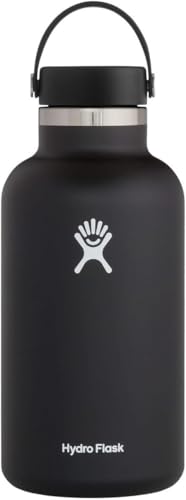
Hydro Flask’s dedicated beer growler has become hard to find, but its 64 oz Wide Mouth bottle does growler duty so well that many campers already use it as one. The TempShield double-wall vacuum insulation keeps drinks cold for up to 24 hours by the maker’s rating, the 18/8 pro-grade stainless interior does not retain flavors between a coffee fill and a beer fill, and the wide mouth is the easiest in this lineup to fill at a taproom, to add ice to, and — critically — to scrub clean.
The Flex Cap is a screw cap with a comfortable carry handle, and it seals leakproof for transport in a cooler or pack. As a carbonation keeper it sits with the other plain growlers: a tight seal protects an unopened fill, but there is no pressure system, so an opened beer softens over a day or two. Where it beats the dedicated growlers is versatility — the same vessel hauls cold brew, soup, or a full day of ice water on the drive, and the powder coat finish gives grip and hides scratches.
Choose this one if your growler will spend as much time on water and coffee as on beer, or if cleaning ease ranks above carbonation. Choose a uKeg if fizz is the whole point.
Specs
- Capacity: 64 oz
- Material: 18/8 pro-grade stainless steel, BPA-free
- Insulation: TempShield double-wall vacuum insulation
- Maker’s retention claims: Cold up to 24 hours, hot up to 12 hours
- Lid: Flex Cap screw cap with carry handle, leakproof seal
- Mouth: Wide mouth for filling, ice and cleaning
How to Choose
Decide the carbonation question first. It is the only decision that really splits this category. A pressurized growler (uKeg Go, uKeg 128) replaces the CO2 you pour off, so carbonation survives days of serving. A plain vacuum growler protects an unopened fill but loses fizz with every pour, because the headspace refills with air and the remaining beer slowly gives up its gas. If your fills are opened and finished within a day, plain is fine and simpler. If a fill lives across a long weekend, pressurized is the only honest answer.
Read retention claims as best cases. Maker numbers — 24 hours cold here, 76 hours there — come from pre-chilled, sealed vessels in controlled conditions. Sun on a picnic table, a warm fill, a half-empty growler and a cooler opened hourly all cut them down. In practice every pick here keeps a cold fill properly cold for a full camp day; the bigger claims mostly buy you margin on multi-day trips and hot drives.
Match size to the group. Sixty-four ounces is four pints: right for one or two drinkers across a weekend, or a small group for one evening. The 128 oz uKeg doubles that for group camps but doubles the weight and cooler footprint too, and a half-finished gallon is a lot of beer going flat-adjacent in the fridge afterward — pressurized or not, finish fills promptly.
Think about the seal for cooler transport. Swing and hinged lids with silicone gaskets (the Stanley) seal carbonation best among plain growlers and pour one-handed. Screw caps (Coleman, Hydro Flask) are simpler and very leak-resistant but vent fully at every opening. Pressurized taps pour without opening the vessel at all — the best leak and fizz behavior, at the cost of parts to clean. Whatever you choose, transport growlers upright when you can; even a leakproof seal weeps under hours of sloshing against warm cooler water.
Match the growler to the drink. Draft beer and kombucha reward pressure. Cold brew, iced tea, lemonade and water only need cold, so the Coleman or Hydro Flask serve them perfectly. Hot drinks flip the logic entirely — carbonation is irrelevant, retention is everything.
Plan for cleaning. Narrow mouths and tap systems are where growlers go to die of neglect. Rinse any growler the day it empties, use a bottle brush and warm soapy water, and let it dry uncapped. Pressurized models need the tap flushed and the cap rinsed so beer cannot dry in the mechanism. The Stanley (dishwasher safe) and the wide-mouth Hydro Flask are the low-effort ends of this lineup; the uKegs ask a few more minutes in exchange for their pour.
Know when a growler is the wrong tool. For a single evening, cans are lighter, portion themselves, and need no washing. A growler wins when you want a specific draft beer that is not canned, when you are refilling repeatedly from a favorite tap, or when a group will drink from one vessel around one fire. It loses on backpacking trips, anywhere weight is counted, and whenever the beer you want already comes in cans.
FAQ
How long does beer stay carbonated in a plain insulated growler?
An unopened, well-sealed fill keeps its carbonation for several days in the fridge. Once you start pouring, each serving admits air and the beer typically tastes noticeably softer after 24 to 48 hours of repeated opening. Pressurized growlers avoid this by replacing the poured volume with CO2.
Do pressurized growlers need special cartridges?
They use small food-grade CO2 cartridges that fit in the cap — the uKeg models here use 8 g cartridges. A cartridge typically lasts through one full growler fill. Pack a spare on any trip; without one, a pressurized growler still works as a plain insulated growler, just without the fizz protection.
Can I put drinks other than beer in an insulated growler?
Yes — stainless vacuum growlers are excellent for cold brew coffee, kombucha, cider, sparkling water and iced tea, and they carry hot drinks like coffee and soup as well. Rinse between strongly flavored fills; stainless steel does not hold flavors for long, but dried coffee in a tap mechanism will taint the next beer.
Will a brewery fill any growler I bring?
Most taprooms fill clean stainless growlers, and many prefer them to glass for durability. Arrive with the growler clean, dry and uncapped-smelling — breweries can and do refuse a dirty vessel. Rules on filling other breweries’ branded growlers vary by location, so a plain, unbranded vessel avoids the conversation entirely.
Why not just use a glass growler with a good cap?
Glass insulates poorly, lets in light that skunks beer, and breaks exactly where campsites are hardest — gravel, tailgates, cooler corners. Stainless vacuum growlers fix all three problems, which is why every pick in this guide is steel.
Conclusion
For most campers, the Stanley Classic Easy-Pour is the right insulated growler: a strong gasket seal, honest insulation and the easiest cleanup in the plain category. If carbonation across a whole weekend is the point of the trip, step up to the GrowlerWerks uKeg Go in 64 oz, or the uKeg 128 when a group is drinking. The Coleman is the pick for long, cold storage of everything except fizz-critical beer, and the Hydro Flask 64 oz Wide Mouth earns its place as the one vessel that covers growler duty, coffee duty and water duty in a single piece of kit. Pick by the drink you pour most, keep it clean, and the last pint at camp will taste like the first.
More from Amazon
Programs that pair well with the guide above. Offers and eligibility are set by Amazon and may change.
Free shipping on eligible items, Prime Video and more. Eligible new members can start with a free trial.
Start a Prime free trialA Prime membership for ages 18-24 with a trial period. Eligibility is set by Amazon.
See Prime for Young AdultsAudiobooks and podcasts to listen to on the go. Eligible new members can start with a free trial.
Try Audible freeAd-free music streaming. Eligible new subscribers can start with a free trial.
Try Music Unlimited freeAs an Amazon Associate we earn from qualifying purchases.
Write Your Review
No reviews yet. Be the first to share your experience!