

Key takeaways
- Compare cable climbers by weight, platform size and tree range, with honest harness, TMA and capacity guidance for safer all-day deer season sits.
As an Amazon Associate we earn from qualifying purchases.
Affiliate Disclosure: This article contains affiliate links. If you buy through a link on this page, we may earn a commission at no extra cost to you. That income keeps our gear coverage independent and free to read.
A climbing tree stand is the most mobile way to hunt from height: no ladder to haul, no stand left hanging all season, just two frame sections that walk up a trunk with you. It is also, honestly, the stand type with the least room for carelessness. You are climbing with the stand itself, so every part of the system — the cables, the tree, your harness, and your own habits — has to work. Most treestand falls happen while climbing up or down, not while sitting, which is why this guide treats safety as the main spec, not a footnote.
Start with the non-negotiables that apply to every pick below. Wear a full-body fall-arrest harness from the moment your feet leave the ground until they are back on it, attached to the tree the whole way up with a climbing belt or lifeline-style strap — a harness sitting in your pack protects nothing. Buy stands that meet the standards recognized by the Treestand Manufacturer’s Association (TMA) and that ship with a proper harness, then read the manual before the season, not in the dark on opening morning. Respect the weight rating as a total: your body, winter clothing, boots, pack, and firearm or bow all count against it. And practice at low height, in daylight, near home, until the climb is boring — the first full-height climb should never be the first climb.
1. Summit Viper SD — The All-Round Cable Climber

The Viper SD is the reference point for sit-and-climb stands, and its spec sheet explains why. The aluminum frame weighs about 20 pounds, carries a 300-pound rating, and gives you a 20 x 36-inch platform — big enough to stand and turn carefully, small enough to pack through brush. Summit’s QuickDraw cable system is the heart of it: coated steel cables that wrap the trunk and lock into the frame with a spring-loaded trigger, adjusting quickly as the tree tapers on the way up. The stand fits trees roughly 8 to 20 inches in diameter, and that range is a hard limit, not a suggestion — a trunk outside it means the cables cannot sit at a safe angle, and the correct move is to pick a different tree.
Comfort is where the Viper SD earns its all-day reputation. The suspended foam-padded seat with a backrest hangs like a sling chair rather than a perch, and it slides up or down to set your seat height. Dead Metal sound-deadening fills the platform channels to dull the metallic ping that carries through cold woods when a boot shifts. It is not silent — no climber is — but a practiced, slow climb with the cables seated firmly at each step is far quieter than a hurried one.
On safety, the Viper SD ships with a full-body harness and meets TMA-recognized standards. Use the included seat-side umbilical strap that ties the top and bottom sections together; if the platform ever slips, that short tether is what keeps it within reach instead of sliding to the base of the tree. Stay within the 300-pound total, harness on from ground level, and this is the stand most hunters should start from.
Specs
- Construction: Aluminum frame, closed-front sit-and-climb
- Attachment: QuickDraw coated steel cables
- Stand weight: 20 lb
- Weight capacity: 300 lb total (hunter plus all gear)
- Platform: 20 x 36 in; suspended padded seat with backrest
- Tree diameter range: 8–20 in
- Includes: Full-body fall-arrest harness; TMA-recognized standards
2. Summit Goliath SD — More Room, Higher Rating

The Goliath SD is the Viper concept scaled for bigger hunters and bulkier late-season clothing. The rating rises to 350 pounds, the seat frame widens, and the stand weight climbs only slightly to about 21 pounds because the frame is still aluminum. The platform remains 20 x 36 inches, so the extra room is mostly in the seat section — which is where a larger hunter actually feels a standard climber pinch, especially wearing insulated bibs in December.
That 350-pound rating deserves the same honest math as any other. It covers you plus everything you carry up: rifle, pack, heavy boots, and cold-weather layers can easily add 30 to 40 pounds to your scale weight. A hunter near the limit of a 300-pound stand belongs on a 350-pound stand like this one, with margin to spare — hunting at the very edge of a rating leaves nothing for a dynamic load if you shift or stumble against the frame.
The Goliath uses the same QuickDraw cable attachment and Dead Metal platform as the Viper, fits the same general run of straight trunks, and includes a full-body harness built to TMA-recognized standards. The trade-offs are a slightly wider package on your back and the same climber limitations as every pick here: straight, limb-free trunks only, because any branch in the way stops the climb cold.
Specs
- Construction: Aluminum frame, closed-front sit-and-climb
- Attachment: QuickDraw coated steel cables
- Stand weight: 21 lb
- Weight capacity: 350 lb total (hunter plus all gear)
- Platform: 20 x 36 in; wider seat frame, padded suspended seat
- Tree diameter range: 8–20 in
- Includes: Full-body fall-arrest harness; TMA-recognized standards
3. Summit Titan SD — The Roomiest Platform Here

The Titan SD is Summit’s largest climber: a 21 x 38.5-inch platform, a 350-pound rating, and a wider, longer top section built for hunters who want maximum room to stand, stretch, and wait out a full day. At about 25 pounds in aluminum it is the heaviest aluminum pick in this guide, and that weight is the honest cost of the space. For a short walk to a known tree it is a fine trade; for a mile of public-land hills, it adds up on your shoulders.
The bigger platform changes the sit more than the climb. There is room to stand fully upright and turn toward a shot angle without your boots hanging off an edge, and the padded seat and armrests suit genuinely long sits. The climb itself is the standard Summit cable routine — steady, deliberate, harness attached throughout, and the two sections tethered together so the platform can always be recovered by its strap.
Everything said about ratings applies with extra force here, because a roomy stand invites extra gear. A rangefinder, thermos, pack, and rifle all ride against the same 350 pounds. The Titan fits trees from 8 to 20 inches in diameter; oversize trunks are out, full stop. If your woods are mostly very large mature oaks beyond that range, a climber of any brand is the wrong tool, and the How to Choose section below covers the alternatives.
Specs
- Construction: Aluminum frame, closed-front sit-and-climb
- Attachment: QuickDraw coated steel cables
- Stand weight: 25 lb
- Weight capacity: 350 lb total (hunter plus all gear)
- Platform: 21 x 38.5 in; padded seat and armrests
- Tree diameter range: 8–20 in
- Includes: Full-body fall-arrest harness; TMA-recognized standards
4. OL’MAN Multi-Vision — Steel Frame, Three Configurations
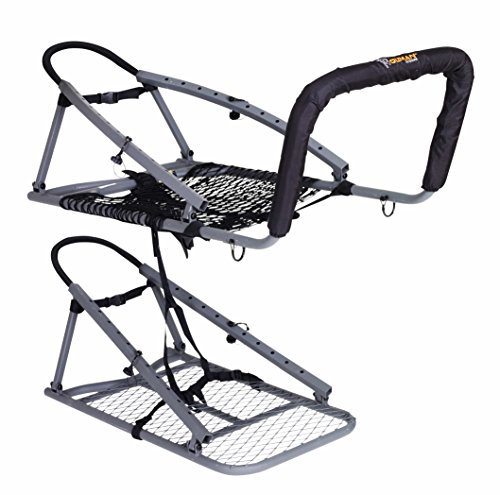
The Multi-Vision from OL’MAN (under Millennium Outdoors) is the steel option in this lineup, and steel changes the feel: at about 29 pounds it is noticeably heavier to carry, but the frame feels rigid and planted once the stand bites the bark. Its party trick is configuration. The front bar reverses, so the same stand sets up with a straight bar for bowhunting, a gun rest for rifle season, or the bar flipped as a footrest — one stand that follows you across seasons and weapons.
The seat is a 21-inch-wide net design in the OL’MAN ComforTech style, which spreads weight evenly and does not soak up rain or hold ice the way thick foam can — a real comfort point on wet November mornings, though net seats feel firmer than Summit’s suspended foam on very long sits. The standing platform measures 18 x 32 inches, a step smaller than the Summit platforms, so foot room is tighter for larger boots.
The rating is 300 pounds total, and the same rules govern it: harness on at ground level, stay attached while climbing, and never treat a steel frame’s solidity as permission to exceed the limit or the tree range the manual specifies. Steel also asks for a little more care — touch up chipped coating, store the stand dry, and inspect cables and pins each season, because corrosion is a safety issue, not a cosmetic one. For a hunter whose walks are short and who wants one stand for bow and gun seasons, the Multi-Vision makes a durable case.
Specs
- Construction: Steel frame, sit-and-climb
- Attachment: Cable system with reversible front bar (bow, gun rest, or footrest configurations)
- Stand weight: 29 lb
- Weight capacity: 300 lb total (hunter plus all gear)
- Platform: 18 x 32 in; 21 in wide net seat
- Includes: Full-body fall-arrest harness; TMA-recognized standards
5. Summit Viper Pro SD — The Refined Flagship

The Viper Pro SD is the current flagship version of the Viper formula: aluminum construction, the QuickDraw cable system, a 300-pound rating, and refinements aimed at the two things climber owners complain about most — noise and fiddly setup. The platform carries Summit’s sound-deadening treatment, the seat is a padded suspended design for all-day sits, and the overall package stays in the low-20-pound range, so it still packs in like a mobile stand rather than a semi-permanent one.
Functionally it hunts like the standard Viper SD: sit-and-climb operation, a 20 x 36-inch class platform, and a tree range of roughly 8 to 20 inches in diameter. Where it earns its keep is in the details that make a careful climb easier to repeat — positive cable engagement you can confirm by feel, stirrups that keep boots placed on the platform, and a seat that adjusts without loose parts to drop in the dark. Dropped parts matter: anything that falls from height is gone until you climb down, and climbing down in a hurry is exactly how accidents happen.
The safety package mirrors the rest of the Summit line — a full-body harness is included and the stand meets TMA-recognized standards. Treat the Pro the same as every climber here: harness attached from the ground, sections tethered together, total load under the rating, and a full practice session at low height before it ever goes to hunting height. Refinement reduces annoyance; it does not reduce gravity.
Specs
- Construction: Aluminum frame, closed-front sit-and-climb
- Attachment: QuickDraw coated steel cables
- Stand weight: 22 lb
- Weight capacity: 300 lb total (hunter plus all gear)
- Platform: 20 x 36 in; padded suspended seat with backrest
- Tree diameter range: 8–20 in
- Includes: Full-body fall-arrest harness; TMA-recognized standards
How to Choose
Start with the tree, not the stand. Every climber in this guide needs a straight, limb-free trunk within its diameter range — mostly 8 to 20 inches — from ground to hunting height. A leaning tree, a fork, or one low branch defeats a climber completely. If your hunting ground is crooked hardwoods, fence-line trees, or trunks well over 20 inches, look honestly at the alternatives: a hang-on stand with climbing sticks handles crooked trees and stays set for weeks, and a ladder stand is the most stable, easiest-climbing option where you can leave it in place. Climbers win on mobility and on public land where stands cannot stay overnight; they lose on tree selection, every time.
Do the capacity math before anything else. Add your body weight, heaviest clothing, boots, pack, and weapon. If the total is anywhere near a 300-pound rating, buy a 350-pound stand. The rating is a ceiling for the whole system — cables, frame, and platform — not a target.
Match weight to your walk. Aluminum climbers here run 20 to 25 pounds; the steel OL’MAN is 29. Under a half mile on decent ground, any of them carry fine. Past a mile, or up real elevation, the lightest stand you can safely use is the right stand, and a few pounds saved is worth more than a bigger platform.
Understand attachment systems. The Summit stands use coated steel cables — fast, durable, and adjustable as the trunk tapers, with a positive lock you can verify by tug before each move. Chain systems, common on older API-style climbers, grip hard and last for years but are heavier and noisier to handle. Belt systems, used by some lightweight hand climbers, are the quietest and lightest but demand careful inspection for wear. Whichever system you choose, inspect it before every season and replace worn cables, belts, or pins immediately — a failed attachment at height is the worst failure there is.
Plan for noise honestly. Climbers creak, cables tick against bark, and platforms ring if a boot lands carelessly. Practice climbs in the off-season, move slowly, seat each section firmly before weighting it, and keep metal-to-metal contact padded where the design allows. A quiet climb is a practiced climb, not a purchased feature.
Non-negotiable safety habits. Full-body harness on at ground level and attached during the entire climb, sit, and descent. Tether the two stand sections together. Use a haul line for your bow or unloaded firearm — never climb carrying either in your hands. Tell someone where you are hunting and when you expect to return. Inspect the stand before each use, and retire any stand with bent tubes, frayed cables, or cracked welds rather than repairing structural parts yourself.
FAQ
Are climbing stands safe for beginners?
They can be, with preparation. The design is well proven, but the climber is the most technique-dependent stand type. A beginner should practice repeatedly at a few feet off the ground in daylight, learn the harness and climbing belt until they are automatic, and only then hunt at height. Skipping practice is what makes climbers risky.
What trees work with a climbing stand?
Straight, single trunks with no limbs from the ground to your hunting height, within the stand’s diameter range — typically 8 to 20 inches — and with bark the teeth can grip. Very smooth, wet, or icy bark reduces grip, and oversized or undersized trunks are unsafe. When in doubt, choose a different tree.
How much weight can I actually put on a 300-pound stand?
Three hundred pounds total: you, all clothing and boots, your pack, and your bow or firearm combined. Weigh yourself in full late-season gear if you are close to the line, and step up to a 350-pound model for a real margin.
How high should I climb?
High enough for concealment and a clear shot lane — commonly in the mid-teens to around twenty feet for deer hunting — and no higher than you have practiced. Extra height steepens shot angles and lengthens a fall’s consequences; it is not automatically better.
Can I leave a climbing stand on the tree between hunts?
You can cable-lock one at the base, but climbers are designed to go in and out with you, and leaving one out exposes cables, seats, and straps to weather and UV that shorten their safe life. Check your local rules too — many public lands require stands to be removed daily.
Conclusion
For most deer hunters, the Summit Viper SD remains the balanced starting point: 20 pounds, a proven cable system, and a seat built for all day. Bigger hunters or heavy late-season loads point to the 350-pound Goliath SD or the extra-roomy Titan SD, while the steel OL’MAN Multi-Vision suits short walks and mixed bow-and-gun seasons, and the Viper Pro SD refines the flagship formula. Whichever stand you choose, the purchase that actually keeps you safe is the boring one: a harness worn correctly, a practiced climb, an honest weight total, and a straight tree inside the stated range. Hunt high, but climb like the descent matters — because it does.
More from Amazon
Programs that pair well with the guide above. Offers and eligibility are set by Amazon and may change.
Free shipping on eligible items, Prime Video and more. Eligible new members can start with a free trial.
Start a Prime free trialA Prime membership for ages 18-24 with a trial period. Eligibility is set by Amazon.
See Prime for Young AdultsAudiobooks and podcasts to listen to on the go. Eligible new members can start with a free trial.
Try Audible freeAd-free music streaming. Eligible new subscribers can start with a free trial.
Try Music Unlimited freeAs an Amazon Associate we earn from qualifying purchases.










Write Your Review
No reviews yet. Be the first to share your experience!