

Key takeaways
- Mummy bags taper toward the feet, include a hood, and minimize empty air that your body must warm. They are usually the most efficient choice for backpacking and cold weather.
- Spoon-shaped bags widen at the elbows and knees. They suit side sleepers and people who change positions frequently while remaining more thermally efficient than rectangular bags.
- Rectangular bags provide the most room for stretching, reading, or wearing bulky sleep clothing. They are comfortable for warm-weather and vehicle-based trips but heavier and less efficient in cold conditions.
- Double bags can work for couples, but check whether the combined comfort rating, hood arrangement, and zipper compatibility suit your climate. Two separate bags offer more flexibility.
The best sleeping bags depend on your lowest overnight temperature, sleeping position, tolerance for weight, and how much room you need—not simply the bag with the lowest temperature number.
Quick picks by camping situation
| Camping situation | Best choice | Useful target specification | Why it fits |
|---|---|---|---|
| Summer car camping | Rectangular synthetic bag | Comfort rating 45–55°F; 2.5–4.5 lb; packed length under 16 in | Affordable, roomy, and easy to wash |
| Three-season backpacking | Mummy down bag | Comfort rating 25–35°F; 1.5–2.5 lb; 650–800-fill down | Good warmth for the carried weight |
| Cold shoulder-season trips | Insulated mummy or close-fitting hybrid | Comfort rating 15–25°F; 2–3.5 lb; full-length draft tube | Reduces heat loss around the torso and zipper |
| Wet climates or damp storage | Synthetic rectangular or mummy bag | Comfort rating 30–40°F; 2.5–4.5 lb; compression-resistant synthetic fill | Retains more insulating ability when damp and costs less |
| Broad-shouldered or side sleepers | Spoon-shaped or wide mummy bag | At least 60 in shoulder girth and 50 in hip girth | Allows knee movement without the heat loss of a fully rectangular bag |
Temperature ratings: compare comfort, not the headline limit
For most buyers, the EN or ISO comfort rating is the useful number. It estimates the lowest temperature at which a standard cold sleeper can sleep comfortably in relaxed clothing. The lower limit describes a more curled-up sleeper, while an extreme rating is not a sensible target for routine camping.
Our top picks

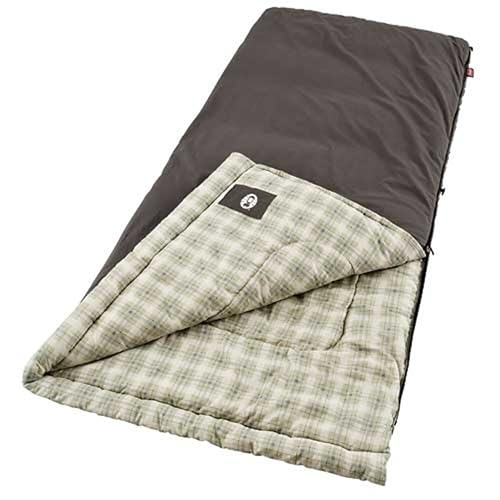

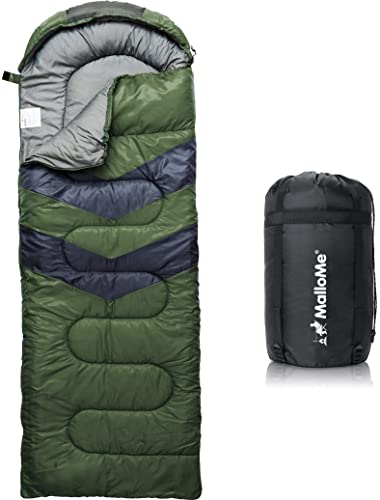
As an Amazon Associate we earn from qualifying purchases at no extra cost to you. Ratings are shown as listed on Amazon.
Choose a bag whose comfort rating is roughly 10°F below the coldest temperature you expect. For example, if your campsite may reach 35°F, a bag rated to 25°F comfort gives you a practical margin for wind, humidity, tiredness, and inaccurate forecasts. Do not assume a “20-degree bag” provides identical warmth across brands: fill amount, hood design, draft collar, fit, and testing standards all affect performance.
Your sleeping pad matters just as much. A warm sleeping bag cannot compensate for a thin pad that allows ground heat to escape. For cool-weather camping, pair the bag with a pad rated around R-value 4 or higher; for freezing conditions, a higher-value pad is generally more appropriate.
Down versus synthetic insulation
Down: lighter and smaller
Down provides excellent warmth for its weight and compresses much more than most synthetic insulation. A quality 650–800-fill-power down bag can deliver a 30°F comfort rating at approximately 1.5–2.5 pounds, depending on size and construction. It is usually the better choice for backpackers who carry their sleeping system often.
The trade-offs are price and moisture management. Wet down clumps and loses loft, and repeated tight compression can reduce long-term loft. Use a waterproof stuff sack or pack liner, air the bag out each morning, and store it loosely in a large storage sack at home.
Synthetic: practical in damp conditions
Synthetic insulation is generally heavier and bulkier for the same warmth, but it dries faster, handles occasional moisture more forgivingly, and is often less expensive. A 30°F synthetic bag commonly weighs about 2.5–4 pounds and may cost roughly $100–$250, compared with approximately $200–$500 or more for a comparable down model.
Synthetic fibers gradually lose loft through compression and use. That does not make them disposable, but a frequently used bag may feel less warm after several seasons. Synthetic is especially sensible for car camping, humid environments, children, and campers who do not want to manage delicate down.
| Insulation type | Typical 30°F comfort weight | Typical packed volume | Typical market range | Best advantage |
|---|---|---|---|---|
| 650-fill down | 2–3 lb | 6–10 L | $180–$400 | Balanced warmth and cost |
| 800-fill down | 1.5–2.25 lb | 4–8 L | $300–$650+ | Lowest weight and smallest pack size |
| Modern synthetic | 2.75–4 lb | 10–18 L | $100–$300 | Value and damp-weather practicality |
Shape and roominess: warmth versus freedom of movement
- Mummy bags taper toward the feet, include a hood, and minimize empty air that your body must warm. They are usually the most efficient choice for backpacking and cold weather.
- Spoon-shaped bags widen at the elbows and knees. They suit side sleepers and people who change positions frequently while remaining more thermally efficient than rectangular bags.
- Rectangular bags provide the most room for stretching, reading, or wearing bulky sleep clothing. They are comfortable for warm-weather and vehicle-based trips but heavier and less efficient in cold conditions.
- Double bags can work for couples, but check whether the combined comfort rating, hood arrangement, and zipper compatibility suit your climate. Two separate bags offer more flexibility.
A close fit is warm only if it does not compress the insulation. Measure your shoulder, hip, and height, then compare those measurements with the manufacturer’s internal dimensions. As a practical rule, a bag should allow a little space for a base layer and movement, but not leave several inches of unused air around your torso. Tall campers should select the long version rather than forcing their feet against the footbox, which can compress insulation and create a cold spot.
Head-to-head: what to inspect beyond the temperature rating
| Feature | Better for cold weather | Better for warm or casual camping |
|---|---|---|
| Zipper | Full-length zipper with draft tube and anti-snag guard | Shorter zipper or two-way zipper for ventilation |
| Hood | Adjustable, shaped hood with neck closure | Low-profile hood or no hood when used with a separate pillow |
| Draft control | Insulated draft collar and footbox | Minimal draft features for lower weight and easier venting |
| Shell fabric | Lightweight tightly woven fabric with a water-resistant finish | Heavier, more durable fabric for tent or cabin use |
| Ventilation | Two-way zipper and foot zipper | Full opening that can convert the bag into a quilt or blanket |
Zipper design has an outsized effect on comfort. A full-length zipper makes temperature control easier, while a two-way zipper lets you vent your feet without opening the upper portion. Look for a draft tube behind the zipper on bags intended for cool weather. Left- and right-hand zippers may pair together on compatible models, but compatibility is not universal, so check before buying two bags to join.
Weight and packed size: calculate the real backpacking cost
Suppose you take eight backpacking trips per year for five years. A $400 down bag costs about $10 per trip before considering resale value: $400 ÷ 40 uses. A $180 synthetic bag costs about $4.50 per trip. The down option may still be worthwhile if saving 1.5 pounds lets you carry less or walk farther, but the cheaper bag is often the rational choice for occasional trips and car camping.
Compare the packed volume of the entire sleep system, not just the compression sack. A 7-liter sleeping bag plus a 5-liter insulated jacket may fit differently from a 12-liter bag, even if the total volume is similar. Avoid compressing down for long-term storage, and do not judge warmth from packed size alone: a small bag can be underfilled, while a larger bag may contain more insulation.
Ownership realities: keeping a sleeping bag warm for longer
- Use a sleeping liner only when it solves a problem. A liner can keep the interior cleaner or add modest warmth, but it also adds weight and does not replace a warmer-rated bag.
- Air the bag out after every night. Moisture from perspiration accumulates inside the insulation. Hang it or lay it flat in shade before packing.
- Wash only when necessary. Follow the care label and use cleaner made for down or technical insulation. Household detergent can reduce loft and leave residues.
- Repair small shell damage early. A tiny tear can release insulation or allow a zipper snag to worsen. Use an appropriate fabric repair patch rather than ordinary tape as a permanent fix.
- Store it uncompressed. The storage sack supplied with many bags is large for a reason. Long-term compression accelerates loft loss, especially in synthetic fills.
The most versatile answer for many campers is a 30°F comfort-rated, three-season bag: down if low weight and small pack size matter, synthetic if price, damp conditions, or easy care matter more. Choose a 45–55°F rectangular bag for summer car camping, a 15–25°F mummy for cold shoulder-season trips, and a spoon-shaped model when conventional mummy bags restrict your knees or shoulders.



Write Your Review
No reviews yet. Be the first to share your experience!