

Key takeaways
- Compare six self inflating camping sleeping pads by thickness, R-value and inflation style, with tips on warmth and side sleeper comfort.
The Gear Doctors Oxylus is the best overall self-inflating camping sleeping pad in this group, because it is the only one here that states a clear insulation figure, a 4.3 R-value, and it relies on a true foam core that expands by itself. A self-inflating pad contains open-cell foam that draws air in through a valve when you open it, so you add only a few breaths to firm it up. Several other listings here are thicker and add a built-in pillow, but many rely on a foot pump, so read each description closely before you buy.
Quick List
- FUN PAC Ultralight Pad – best for lighter packing with a pillow and built-in foot pump
- LLUAII 5.9-Inch Pad (first listing) – best for side sleepers who want very thick cushioning
- LLUAII 5.9-Inch Pad (second listing) – best as a matching option when you need a second pad
- FNARMW 5-Inch Pad – best for car campers who want a thick pad with a pillow
- Gear Doctors Oxylus – best for three-season insulation with a stated R-value
- TEKIK Memory Foam Pad – best for plush comfort with fast self-inflation
Which One Is Right for You?
| If you… | Choose |
|---|---|
| need documented insulation for cool nights | Gear Doctors Oxylus |
| sleep on your side and want the deepest cushion | LLUAII 5.9-Inch Pad |
| want memory foam that inflates in seconds | TEKIK Memory Foam Pad |
| prefer a thick pad with a pillow already attached | FNARMW 5-Inch Pad |
| care about packing weight and pack size | FUN PAC Ultralight Pad |
| are buying two pads and want them identical | LLUAII 5.9-Inch Pad (second listing) |
Most of these are thick comfort pads designed for car camping and casual trips rather than winter mountaineering. Decide whether warmth or softness matters more, then check what the listing says about insulation, because several do not state an R-value.
All 6 Picks in Detail
1. FUN PAC Ultralight Pad – Runner-Up for Lightweight Foot-Pump Camping
As an Amazon Associate we earn from qualifying purchases at no extra cost to you.

FUN PAC’s listing calls this an ultralight camping mat with a pillow, a built-in foot pump and an inflatable design, compact for camping and backpacking. Because the description leans on a foot pump and the word inflatable rather than foam that expands by itself, it behaves more like a pumped air pad than a classic self-inflating foam pad, so we treat it as a runner-up for this topic. The pump is the useful part for campers who dislike blowing up pads with their breath.
- Type: inflatable pad with a built-in foot pump
- Pillow: included
- Weight class: described as ultralight
- Thickness and dimensions: confirm on listing
- R-value: confirm on listing
Pros:
- Built-in pump avoids breath moisture
- Compact pack size
Cons:
- Not clearly self-inflating foam
- Insulation is not stated
It is lighter in spirit than the thicker pads below, but it documents less than the Oxylus. If you are shopping on weight, find the packed size and weight on the product page, since those figures decide whether it truly suits backpacking. Treat the foot pump as a convenience, and practice using it at home so you know how many pumps give a comfortable firmness.
2. LLUAII 5.9-Inch Pad – Best for Deep Side-Sleeper Cushioning

The listing describes a 5.9 inch thick camping mat with a built-in pillow and foot pump, and it uses the words self inflating. That thickness is at the top of this group, and a deep cushion helps side sleepers keep the hip off the ground. As with the FUN PAC, a foot pump suggests the pad relies on pumping to reach full firmness, so read the description for how much air you need to add by hand.
- Thickness: 5.9 inches per the listing
- Pillow: built in
- Inflation aid: foot pump
- Marketing term: self inflating
- Length, width, weight and R-value: confirm on listing
Pros:
- Very thick for pressure relief
- Pillow already attached
Cons:
- Bulky to pack
- Insulation value is not stated
It is thicker than the FNARMW pad, though the Oxylus offers a documented R-value. If you choose it, test fit your sleeping bag and tent floor first, because a pad this deep and wide can crowd a two-person tent. Look for a repair patch, a stuff sack and a valve that seals tightly, and check whether the pillow can be deflated separately.
3. LLUAII 5.9-Inch Pad, Second Listing – Best as a Matching Second Pad

This is a second catalog entry whose title begins exactly like the one above, including the 5.9 inch thickness, built-in pillow and foot pump. The two likely differ in size, color or pack quantity, but the visible title text does not say which, so check the product page before choosing. Buying two entries of the same model is a way to match a pair for a couple, though you should confirm that the dimensions match before zipping bags together.
- Thickness: 5.9 inches per the listing
- Pillow and foot pump: built in
- Marketing term: self inflating
- Difference from the first listing: confirm on listing
- Dimensions and R-value: confirm on listing
Pros:
- Same thick cushioning as the first listing
- Useful for pairing
Cons:
- Differences from the first listing are unclear
- Same bulk and unknown insulation
Pick between this and the first LLUAII listing based on the size and color options shown on the product page. For a couple, matching thickness and dimensions makes the sleeping surface feel uniform, while mixing different sizes can leave a gap in the middle. Read the question-and-answer and specification sections on the product page to see exactly what differs between the two catalog entries.
4. FNARMW 5-Inch Pad – Best for Car Campers Who Want Thick Comfort

FNARMW lists an extra-thick 5 inch camping mat with a pillow and built-in foot pump, described as inflatable and compact for camping and backpacking. Like the FUN PAC, the wording points to a pumped inflatable rather than a foam-filled self-inflating pad, so treat it as a comfort pad for car camping. Five inches is deep enough to cushion most side sleepers, but the listing does not state insulation.
- Thickness: 5 inches per the listing
- Pillow: included
- Inflation: built-in foot pump
- Type: inflatable
- Dimensions, weight and R-value: confirm on listing
Pros:
- Thick and comfortable for side sleeping
- Built-in pump and pillow
Cons:
- No stated insulation value
- Pump designs add leak points
It is thinner than the LLUAII pads, but a bit simpler in description. That simplicity may be a plus if you want a quick setup: unroll, press the foot pump and lie down. Given the lack of an R-value, plan to bring a warm bag and, in cool weather, a second layer of foam underneath.
5. Gear Doctors Oxylus – Best for Three-Season Insulation
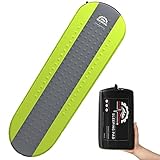
The Oxylus is an insulated air-foam self-inflating pad with a stated 4.3 R-value, and the listing describes it as suited to backpacking, camping and floor use. The maker gives the inflated size as about 72 by 22 by 1.5 inches and a weight around 2.2 pounds, according to manufacturer and retailer data, so confirm those on the current listing. At 1.5 inches thick it is slimmer than the others and will feel firmer for side sleepers, but it insulates and packs smaller.
- R-value: 4.3 per the listing
- Type: self-inflating air-foam pad
- Size: about 72 x 22 x 1.5 inches (confirm on listing)
- Weight: about 2.2 pounds (confirm on listing)
- Use: camping, backpacking, tents, floors
Pros:
- Clearly stated insulation value
- Packs smaller and lighter than very thick pads
Cons:
- Thin for strict side sleepers
- Narrower than some car-camping pads
It trades cushion for warmth and portability, which is the opposite of the 5.9 inch LLUAII. For a side sleeper it can work if you stack it on a cot or add a thin topper, since its insulation is the strength. Remember to confirm the width, because a 22 inch pad can feel narrow for broad shoulders, and top off with a few breaths after it self-inflates.
6. TEKIK Memory Foam Pad – Best for Plush Comfort and Fast Inflation
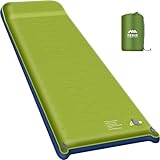
TEKIK’s listing describes a self-inflating memory foam sleeping pad with a pillow, an ultra-thick camping mattress and a claim of 20-second fast inflation and deflation. Memory foam contours to the hips and shoulders, which side sleepers often prefer, and the quick inflation claim is attractive if you dislike waiting. The title is cut off before the thickness value, so check the product page for the final figure.
- Type: self-inflating memory foam pad
- Pillow: included
- Inflation: about 20 seconds per the listing
- Thickness, dimensions and R-value: confirm on listing
- Use: camping mattress
Pros:
- Memory foam conforms to the body
- Quick inflation and deflation claim
Cons:
- Memory foam can feel stiff in cold air
- Thickness and insulation not visible in the title
It offers a plusher feel than the Oxylus but without the Oxylus’s published insulation figure. Memory foam stiffens in cold weather and softens in heat, so its feel changes with the temperature. Weigh the packed size and weight on the product page, because a thick memory foam pad can be one of the bulkiest items in the car.
Specs Compared
| Pad | Type | Thickness | Pillow | Inflation aid | Stated R-value |
|---|---|---|---|---|---|
| FUN PAC Ultralight | Inflatable mat | Confirm on listing | Yes | Built-in foot pump | Confirm on listing |
| LLUAII 5.9-Inch (first) | Marketed as self inflating | 5.9 in | Built in | Foot pump | Confirm on listing |
| LLUAII 5.9-Inch (second) | Marketed as self inflating | 5.9 in | Built in | Foot pump | Confirm on listing |
| FNARMW 5-Inch | Inflatable mat | 5 in | Yes | Built-in foot pump | Confirm on listing |
| Gear Doctors Oxylus | Self-inflating air foam | About 1.5 in (confirm on listing) | Confirm on listing | Self-inflating, top off by mouth | 4.3 |
| TEKIK Memory Foam | Self-inflating memory foam | Confirm on listing | Yes | Self-inflating, about 20 s claimed | Confirm on listing |
How We Chose These
This is a research-based guide. We read each listing title and specification field, noted the thickness, included pillow, inflation method and any insulation value, and compared them with manufacturer information where available, notably for the Oxylus. We separated true self-inflating foam pads from foot-pump inflatables so the label matches the product, and we flagged unclear or missing specifications for you to confirm. We weighed thickness more heavily for side sleepers and R-value more heavily for cold nights, and we did not assume any value the title did not state.
What to Look For
R-value and warmth
R-value measures how well a pad resists heat loss to the ground, and higher is warmer. The ASTM F3340 standard defines a common test method, so values from brands that follow it are comparable, and they add together if you stack pads. As a rough guide, R-values of 1 to 2 suit summer, 2 to 4 work for general three-season use, 4 to 5 handles cool nights, and 6 or more is for winter. R-value is not a temperature rating, and cold sleepers should aim higher. If a listing gives no R-value, assume nothing and pair the pad with a bag that matches your lowest expected temperature.
Thickness and side-sleeper comfort
Side sleepers press hips and shoulders into the pad, so thin pads bottom out. Many guides recommend about four inches for side sleepers, which is why the 5 and 5.9 inch pads here are appealing. Thickness alone does not mean warmth, though; a plush air pad without insulation can feel chilly. Memory foam gives a different feel from air, more like a bed topper. Width matters too: a pad 20 to 22 inches wide is common, but broad sleepers may prefer 25 inches or more.
Self-inflating versus foot-pump and air pads
A true self-inflating pad has foam that expands and pulls in air when the valve is open; you finish with a few breaths to reach firmness. Air pads without foam need a pump or breath to inflate, and foot-pump models include a bellows or pedal, which saves effort and avoids breath moisture. Foot pumps add parts that can leak or wear. Check the listing for whether the pad fills itself, how long it takes and whether a repair patch is included. Foam-filled pads are heavier but resist punctures better than thin air pads.
Weight, pack size and durability
Thick pads are comfortable but bulky, usually 8 to 12 inches in packed diameter. For car camping, that hardly matters; for walking in, every pound counts. Look for a durable fabric, a repair kit and a valve that closes firmly. Avoid dragging the pad over rough ground, keep sharp objects out of the tent, and clean it with mild soap. Store it unrolled with the valve open at home so the foam keeps its loft.
Valves, pillows and small details
The valve is the most failure-prone part of any pad. Look for a wide, push-pull or twist valve that opens and closes cleanly and lets air out fast when packing, and keep it free of sand and grit. Built-in pillows save space and keep your head from sliding off, but a fixed pillow cannot be adjusted for height, so side sleepers who need extra neck support may still want a small separate pillow or a folded jacket. Check whether the surface is quiet or crinkly, since noisy fabrics bother light sleepers. Non-slip fabric on the bottom helps the pad stay put on a cot or tent floor, and a stuff sack with compression straps makes packing less of a wrestling match.
Building a sleep system
The pad is only one part of staying warm. A sleeping bag compresses under your body, so most of your insulation from below has to come from the pad, which is why R-value matters even if your bag is rated for low temperatures. Add a ground sheet or footprint under the tent to protect the pad from moisture and sharp stones, and avoid camping on frozen or wet ground when you can. If you are cold in the early morning, add a closed-cell foam layer under the pad, because the R-values add together and the foam resists punctures. In summer, thick foam pads can feel warm, so a lighter pad improves airflow.
Care, repair and lifespan
Treat a pad like any other piece of sleeping gear: keep it clean, dry and away from sharp edges. Wipe it with mild soap and a damp cloth after muddy trips, let it dry fully before storing, and never leave it inflated in a hot car, because trapped air expands and stresses the seams. Carry a patch kit on every trip, and learn where the repair patch is before you need it. If you find a leak, mark it, dry it and patch it. Foot-pump designs have extra seals and hoses that need inspection, so check them at the start of each season. A well-kept pad can last for many seasons of casual camping.
A worked example
Say overnight lows are about 40 degrees Fahrenheit and you sleep on your side. A pad near R4 handles the cold, but a one-and-a-half-inch pad may feel firm under your hip. You could put the R4.3 Oxylus below a thicker, softer pad for comfort, because R-values add. Alternatively, choose a thick pad like the LLUAII or FNARMW and add a simple foam layer underneath for insulation.
Questions
What is the difference between self-inflating and inflatable pads?
Self-inflating pads contain foam that expands and draws in air when the valve opens. Inflatable pads depend on breath or a pump to fill. Some hybrids use both.
How thick should a pad be for side sleeping?
Aim for about four inches or more. Thinner pads let hips and shoulders touch the ground. If you prefer a firmer pad, add a cushion under the hip.
What R-value do I need for camping?
For summer, a value of 1 to 2 can be enough, for three-season use look for around 3 to 5, and for winter go to 6 or higher. Values from pads rated under ASTM F3340 are comparable. Cold sleepers should add one or two points.
How do I find a slow leak?
Inflate the pad fully, close the valve and listen or feel around the seams and valve. A bowl of soapy water reveals bubbles at the leak. Mark it, dry it and apply a patch from the repair kit.
Can I put a pad on a cot?
Yes, and many people do. A pad adds cushion and insulation, and a cot adds ground clearance. Check that the pad width fits the cot so it does not roll off.
How should I store a self-inflating pad?
Leave it unrolled with the valve open in a cool, dry place when possible. Long-term compression in a stuff sack can reduce the foam’s loft. Make sure it is completely dry first.
Update History
- October 14, 2026 – Initial publication; product set drawn from current catalog listings.
- Check the product page for current specifications and availability before buying.
Sources
- Manufacturer and retailer specification information for Gear Doctors
- Retailer listing titles and specification fields for each listed pad
- ASTM F3340 sleeping pad thermal resistance (R-value) test method, as described in outdoor gear guides



Write Your Review
No reviews yet. Be the first to share your experience!