

The best kids tent is a small, easy-pitch dome or cabin tent with a rainfly, mesh windows and a floor area of roughly 25 to 35 square feet per child, so it works for both backyard sleepovers and real campsites. For indoor play, a pop-up play tent is cheaper and safer, but it will not survive wind or rain. Match the tent to where your child will actually use it before you compare features.
Our top picks

As an Amazon Associate we earn from qualifying purchases at no extra cost to you.
Quick comparison of kids tent types
| Pick | Best for | Key specs | Price range |
|---|---|---|---|
| Coleman Sundome 2-person dome | Best overall for first camping trips | Two poles, about 7 x 5 ft floor, rainfly, roughly 6 lb | Budget |
| Kelty Late Start 2 or 4 | Best for family camping with a child | Two-door layout, freestanding, ripstop polyester, 2 to 4 sleepers | Mid-range |
| Instant-pitch cabin tent (4-person class) | Best for quick setup | Pre-attached poles, 8 x 7 ft floor, 9 to 14 lb | Mid-range |
| Pop-up play tent (tunnel or dome) | Best for toddlers and indoor play | Spring-steel frame, 2 to 4 lb, no stakes needed | Budget |
| Teepee or canvas play tent | Best for imaginative play | 4 to 5 ft height, cotton canvas, wooden poles | Budget to mid-range |
| Ultralight backpacking tent (1 to 2 person) | Best for older kids who hike | 2 to 4 lb, aluminum poles, small packed size | Upper-mid to premium |
Best overall: a 2-person dome like the Coleman Sundome
A two-person dome tent is the safest default for a child’s first night outdoors. According to the manufacturer’s spec sheet, the Coleman Sundome 2-person model uses a simple two-pole design, a roughly 7 by 5 foot floor and a rainfly that covers a large mesh roof. One adult can pitch it in a few minutes, and a child can help by pushing poles through the sleeves.
The trade-off is weather performance. The fabric is a lightweight polyester, so it handles drizzle and moderate wind, but a stormy night will test the seams. Seal them with a silicone seam sealer once before the first trip, and keep the rainfly staked tight.
Best for family camping: a freestanding two-door dome
If a child will camp with one or two parents, a larger freestanding dome such as the Kelty Late Start series gives room for sleeping bags plus a duffel. Two doors mean nobody climbs over a sleeping sibling at night, and the vestibule keeps muddy shoes outside. Kelty lists these tents as freestanding with ripstop polyester, which means you can move the tent after pitching to dodge a wet patch.
The main downside is weight: family domes weigh more than a basic two-person tent, which matters only if you carry it more than a short walk from the car.
Best for quick setup: an instant-pitch cabin tent
Instant or pre-attached pole tents unfold in about a minute. They suit parents who set up alone while kids are impatient. A floor around 8 by 7 feet fits two kids and an adult comfortably. Expect a heavier pack, often 9 to 14 pounds, and a slightly bulkier packed shape.
Check that the hub design has sturdy plastic joints and a full-coverage fly. Cheaper instant tents often skimp on both, and a broken hub is the most common failure.
Best for toddlers and indoor play: a pop-up play tent
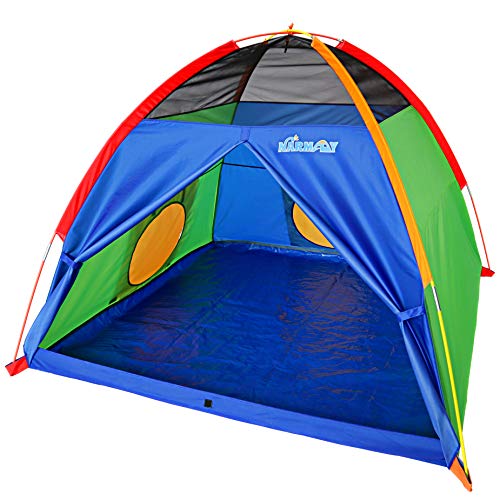
For children under five, a pop-up play tent in a tunnel or dome shape is a better buy than a real camping tent. It folds flat in a carrying case, weighs a few pounds and has no sharp poles. Choose one with a washable floor and mesh windows so a caregiver can see inside.
Do not treat it as a camping shelter. The thin fabric offers no wind or rain protection, and the spring frame can bend if sat on.
Best for imaginative play: a teepee tent
A canvas teepee with wooden poles suits reading corners and backyard play. Heights of 4 to 5 feet allow a child to stand and a parent to crouch inside. Look for a thick cotton canvas and a floor mat, and check that the pole tops are padded.
Best for older kids who hike: a lightweight backpacking tent
Children aged ten and up who carry a share of the gear benefit from a one- or two-person ultralight tent weighing 2 to 4 pounds. Aluminum poles and thin ripstop nylon keep weight down. The trade-off is cost and a smaller living space, so test the fit with the child’s sleeping pad before you commit.
How to choose a kids tent
- Count sleeping space. Allow 25 to 35 square feet per child, and add a few square feet for a pet or gear.
- Pick the right season rating. Three-season tents handle spring through fall. Summer-only tents with big mesh panels vent well but chill quickly on cool nights.
- Check weight. If a child carries the tent, keep it under 10 percent of their body weight. A 60 pound child can handle a 3 pound share of tent parts.
- Look at setup steps. Color-coded poles and clips speed up setup. Fewer than three poles means fewer chances of frustration.
- Check ventilation. Two vents or a mesh roof reduce condensation, which is the usual cause of damp sleeping bags.
Decision matrix
| Your situation | Choose |
|---|---|
| Child is 2 to 5 and mostly plays at home | Pop-up play tent |
| First campsite trip, car camping | 2-person dome |
| Family of three or four | Freestanding two-door dome or cabin tent |
| You set up alone | Instant-pitch cabin tent |
| Hiking with a child over ten | Ultralight 1 to 2 person tent |
Ownership realities and care
Zippers fail first on children’s tents, because small hands pull at an angle. Teach them to hold the fabric flat while zipping and rub a little zipper lubricant on the teeth each season. Stakes are the second loss: carry spares. Always dry a tent before storing it, because mildew can ruin the floor coating in a single damp week. Clean with plain water and a soft sponge instead of detergent, which can strip waterproofing.
Frequently Asked Questions
What size tent does a child need?
A two-person tent suits one child and a parent for a short trip, while a four-person tent is better when siblings share. Plan on about 25 to 35 square feet of floor per child. Taller ceilings help kids move around and change clothes.
At what age can a child sleep in a tent?
Many families start backyard camping around age three, when the child can sleep through the night away from their own bed. Car camping often works from age four or five. Always supervise younger children and follow local campground safety guidance.
Are pop-up play tents safe to sleep in?
They are designed for play, not shelter. Without a rainfly, stakes or windproof fabric they offer little protection overnight outdoors. For sleeping outside, choose a proper dome or cabin tent with a rainfly.
How do I keep a kids tent warm?
Use a sleeping pad with insulation under the sleeping bag, since cold ground steals more heat than cool air. A bag rated to at least 10 degrees below the night low is a safe margin. Keep a hat on the child and avoid bulky cotton pajamas that stay damp.
How should I clean and store a kids tent?
Wipe off dirt with water and a soft sponge, then air dry fully out of direct sun. Store it loosely in a breathable bag in a cool, dry place. Never pack it away damp.


Write Your Review
No reviews yet. Be the first to share your experience!