
Our Short List of 3

- Best for: Bushcraft campers who carve, make feather sticks and light fires with a ferro rod.
- Blade material: Carbon steel
- Blade length: 4.3 inches
- Overall length: 9 inches
- Blade thickness: 3.2 mm spine

- Best for: Car campers and base camps where splitting wood is a daily job.
- Blade material: 1095 Cro-Van steel
- Blade length: 5.25 inches
- Blade thickness: 0.25 inches
- Construction: Full tang
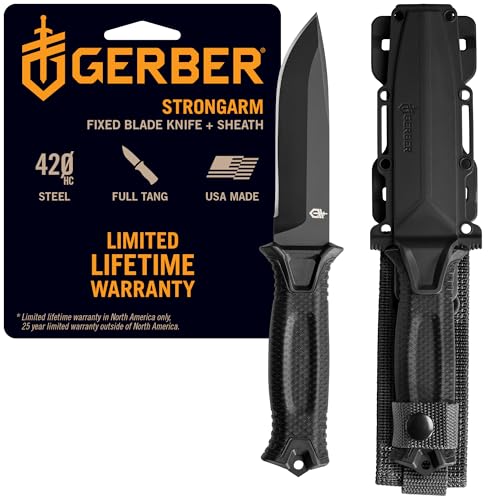
- Best for: Campers who want stainless steel, a secure wet grip and low upkeep.
- Blade material: 420HC stainless steel
- Blade length: 4.8 inches
- Construction: Full tang
- Grip: Rubberized diamond-texture grip
All 3 Picks at a Glance
| Product | Specs | Action |
|---|---|---|
| Morakniv Garberg with Survival Kit |
| Check price on Amazon |
| KA-BAR Becker BK2 Campanion |
| Check price on Amazon |
| Gerber StrongArm |
| Check price on Amazon |
Key takeaways
- Compare full tang camping knives with verified listings: blade steel, tang construction, sheath and grip picks for batoning, carving and camp kitchen work.
A full tang camping knife carries one piece of steel from the tip of the blade through the end of the handle, and that single detail decides how much abuse the knife can take at camp. Partial tangs and rat-tail tangs can loosen or snap when you baton firewood or pry at a stuck tent stake, while a true full tang keeps working. Every knife below states full tang construction on its Amazon listing, so the picks rest on listing-stated facts rather than marketing labels.
The three knives here cover the main camp styles: a Scandinavian bushcraft blade with a survival kit in the sheath, a heavy American camp knife built for splitting, and a rubber-gripped field knife made in the USA. Read the steel and grind notes before choosing, because those two points shape daily use more than blade length does.
Quick Picks
As an Amazon Associate we earn from qualifying purchases.
| Product | Best for | Key spec from title |
|---|---|---|
| Morakniv Garberg with Survival Kit | Bushcraft and fire starting | Carbon steel blade, 4.3 inches |
| KA-BAR Becker BK2 Campanion | Batoning and heavy camp work | 1095 Cro-Van steel, 5.25-inch blade |
| Gerber StrongArm | Wet weather and general camp use | 420HC steel, 4.8-inch full tang blade |
How to Choose
Confirm the Tang Is Really Full
Full tang means the blade steel runs the entire length and width of the handle, usually visible as a steel outline sandwiched between the handle scales. Some listings use phrases like full-length tang for a narrower rat-tail design that is far weaker, so look for wording that says full tang plainly and check whether the handle shows exposed steel edges. A visible steel spine continuing into a pommel or lanyard end is a strong sign. If the listing only shows a silhouette photo with no construction detail, treat the claim as unproven and keep looking.
Match the Steel to Your Maintenance Habits
Carbon steels such as 1095 Cro-Van and Morakniv’s carbon steel sharpen easily on basic stones and throw sparks from a ferro rod spine, but they need drying and occasional oil to prevent rust. Stainless options like 420HC give up some edge life in exchange for shrugging off rain, food prep and humid storage. Neither family is better in absolute terms; the right choice follows your routine. Campers who wipe a blade down each night can enjoy carbon steel, while occasional users who toss gear into a damp bin should lean stainless.
Pick a Grind That Suits Camp Tasks
A Scandi grind bites into wood and makes feather sticks and carving feel controlled, which suits bushcraft-style camping. A flat grind slices food and general material cleanly and is simpler to maintain with guided sharpeners. A saber or hollow grind keeps more steel behind the edge for splitting but wedges more in deep cuts. Think about your real workload: most campers split kindling, cut cordage, open packaging and prepare food far more often than they fell saplings, so an all-round grind usually serves better than an extreme one.
Check the Sheath and Grip, Not Just the Blade
You carry the sheath far more than you swing the knife, so its retention, belt attachment and drainage matter daily. Molded polymer and glass-filled nylon sheaths hold a blade securely and tolerate wet conditions, while leather needs care to avoid stretching. Grip texture decides control when your hands are cold or wet; rubberized and diamond-texture handles stay planted, while smooth polished scales can twist under load. Also confirm the overall length and weight suit your pack, since a heavy knife left at home helps nobody. Finally, look at how the sheath carries: a high-ride belt loop keeps the handle clear of a hip belt on a pack, while a low dangling loop suits camp-only use where the knife comes off at the site.
The 3 Best Options
Morakniv Garberg with Survival Kit
- Best for: Bushcraft campers who carve, make feather sticks and light fires with a ferro rod.
- Blade material: Carbon steel
- Blade length: 4.3 inches
- Overall length: 9 inches
- Blade thickness: 3.2 mm spine
Bushcraft campers who carve, make feather sticks and light fires with a ferro rod.
Carbon steel rusts if stored wet, so dry and oil the blade after trips.
The Garberg is Morakniv’s full tang answer for campers who found the classic Mora blades too light for rough work. Its carbon steel blade uses a Scandi grind that carves wood predictably, and the spine is ground so it can strike the included fire starter. The survival kit version adds a diamond sharpener built into the polymer sheath, which makes field touch-ups simple. The handle shape fills the palm without hot spots, and the whole package stays light enough for backpacking while still splitting kindling sensibly.
KA-BAR Becker BK2 Campanion
- Best for: Car campers and base camps where splitting wood is a daily job.
- Blade material: 1095 Cro-Van steel
- Blade length: 5.25 inches
- Blade thickness: 0.25 inches
- Construction: Full tang
Car campers and base camps where splitting wood is a daily job.
The thick blade wedges in fine carving and the weight is noticeable on backpacking trips.
The BK2 Campanion is the heavy lifter of this group, built around a quarter-inch-thick slab of 1095 Cro-Van steel that runs full tang through an Ultramid handle. That stock thickness shrugs off batoning through seasoned hardwood that would trouble lighter knives, and the flat grind still slices camp food acceptably. The glass-filled nylon sheath carries securely on a belt, and the exposed tang end works as a light hammering surface. It is a base-camp and car-camp tool first; ounce-counting backpackers will feel its pound of weight on long climbs.
Gerber StrongArm
- Best for: Campers who want stainless steel, a secure wet grip and low upkeep.
- Blade material: 420HC stainless steel
- Blade length: 4.8 inches
- Construction: Full tang
- Grip: Rubberized diamond-texture grip
Campers who want stainless steel, a secure wet grip and low upkeep.
420HC needs sharpening more often than carbon steels during heavy wood use.
The StrongArm takes a different route: a 420HC stainless blade with a rubberized diamond-texture grip that stays secure in rain, and a striking pommel at the tang end for light pounding tasks. The full tang build and ceramic blade coating keep it corrosion resistant with minimal upkeep, which suits campers who store gear in garages between trips. Its MOLLE-compatible modular sheath mounts horizontally or vertically, so it rides well on packs and belts. Made in the USA, it balances durability and low maintenance for general camp duty.
Which One Fits Your Situation
Backpacking With Woodcraft on the Plan
Choose the Morakniv Garberg with Survival Kit. It is the lightest of the three, the Scandi grind handles carving and feather sticks with control, and the sheath carries both a fire starter and a sharpener, so two separate items leave your pack list. Dry the carbon blade at night and it will serve for years of trail camps.
Car Camping and Firewood Processing
Choose the KA-BAR Becker BK2 Campanion. When the knife lives in a camp bin rather than on your back, its weight stops mattering and its thick full tang stock becomes the point. It batons firewood, handles rough prying around camp and keeps a working edge through a weekend of chores with basic sharpening.
Wet Climates and Low-Maintenance Storage
Choose the Gerber StrongArm. Stainless 420HC and a ceramic coating tolerate damp storage that would spot a carbon blade, and the rubberized grip stays trustworthy with wet or gloved hands. If your camping happens in coastal rain or humid summers, this is the knife that asks the least of you between trips.
One Knife for Mixed Camp Chores
Choose the Garberg if carving and fire tasks dominate, or the StrongArm if food prep, rain and general utility dominate. Both sit in the versatile middle of this list. The BK2 only earns its place when splitting and heavy work are guaranteed parts of your trip; otherwise its weight buys capability you will rarely use.
Common Mistakes
- Buying a knife labeled full-length tang and assuming it is full tang, when the steel inside is a narrow rat-tail that can fail under batoning.
- Choosing the thickest blade available, then struggling with food prep and carving because the edge geometry wedges in material.
- Ignoring steel care: carbon steel left wet in a sheath over winter can pit badly enough to weaken the edge.
- Judging a knife only by blade photos and never checking sheath retention, which decides whether the knife is still on your belt at camp.
- Using any fixed blade to pry open cans or lever rocks; full tang construction is strong, not indestructible, and tips still snap.
Frequently Asked Questions
Is a full tang knife necessary for camping?
For light camp chores, no; a quality partial tang knife handles food prep and cordage fine. Full tang construction becomes important when you baton wood, pry or lean on the knife hard, because the single steel piece removes the weak joint where blade meets handle. If your camping style includes firewood processing, full tang is the safer and longer-lasting choice.
Which blade steel is best for a camping knife?
There is no single best steel. Carbon steels like 1095 Cro-Van sharpen easily and suit campers who maintain their gear, while stainless steels like 420HC resist rust for people who store knives in damp places. Edge retention, sharpening effort and corrosion resistance trade against each other, so match the steel to your habits rather than chasing a ranking.
Can I baton wood with any full tang knife?
Batoning suits thicker blades with sensible grinds, like the BK2’s quarter-inch stock. Thin full tang blades can survive light kindling work but risk edge damage on knotty hardwood. Keep batoned pieces modest in diameter, strike with a wooden baton rather than a rock, and never twist the blade sideways to free it from a split.
How do I maintain a carbon steel camp knife?
Dry the blade after use, wipe it with a light coat of food-safe oil before storage, and store it out of a damp sheath for long periods. Surface patina is normal and harmless; active orange rust should be cleaned off promptly. A fine stone or the sheath sharpener on the Garberg kit keeps the edge working without workshop equipment. If the knife will sit unused over winter, a slightly heavier oil coat and a dry drawer matter more than any sharpening routine, because storage corrosion does more damage than a season of honest cutting.
More from Amazon
Programs that pair well with the guide above. Offers and eligibility are set by Amazon and may change.
Free shipping on eligible items, Prime Video and more. Eligible new members can start with a free trial.
Start a Prime free trialA Prime membership for ages 18-24 with a trial period. Eligibility is set by Amazon.
See Prime for Young AdultsAudiobooks and podcasts to listen to on the go. Eligible new members can start with a free trial.
Try Audible freeAd-free music streaming. Eligible new subscribers can start with a free trial.
Try Music Unlimited freeAs an Amazon Associate we earn from qualifying purchases.

Write Your Review
No reviews yet. Be the first to share your experience!