

Key takeaways
- Compare the best engine degreasers for greasy bays and blocks, from solvent aerosols and clinging foams to dilutable concentrates, with clear safety rules.
As an Amazon Associate we earn from qualifying purchases.
Affiliate Disclosure: This article contains affiliate links. If you buy through them, we may earn a commission at no extra cost to you.
A greasy engine bay is more than an eyesore. Oil film hides fresh leaks, cooks onto hot surfaces, holds grit against hoses and wiring, and makes every repair job dirtier than it needs to be. The five engine degreasers below cover the formats that actually matter for home and small-shop work: two solvent-based aerosols for baked-on buildup, one water-based foaming aerosol that clings in crevices, one ready-to-use citrus spray, and one professional gallon concentrate you dilute to the strength the job needs.
Before any product comparison, the safety rules come first, because degreasing goes wrong in predictable ways. Work only on a cool engine. A degreaser sprayed onto a hot turbocharger, exhaust manifold or catalytic converter can vaporize, ignite in the case of solvent aerosols, or bake into a worse residue than the grease it was meant to remove. Let the engine sit until every surface is comfortable to touch. Protect the intake and the electronics before you spray. Cover the air intake opening, the alternator, exposed fuse boxes, ignition components and any aftermarket electronics with plastic bags or film, and avoid aiming a hard rinse stream at connectors and sensors. Treat the rinse water as contaminated waste, because it is. Everything that runs off a degreased engine carries oil, grease and solvent with it. Wash on a surface where runoff can be contained or directed to a sanitary drain where local rules allow it, and never hose degreaser runoff into a storm drain — storm drains lead to waterways, not treatment plants. Wear gloves and eye protection, work outdoors or with strong ventilation, and keep solvent aerosols away from pilot lights, sparks and open flame.
How Engine Degreasers Differ
Solvent-based vs water-based. Solvent formulas dissolve petroleum grease aggressively and are the traditional answer for old, oil-soaked engines, but they are flammable, carry stronger hazard labeling, and demand the strictest cool-engine discipline. Water-based formulas use detergents and alkaline or citrus chemistry instead; they are not flammable in the same way, rinse cleanly, and suit most routine bay cleanups, though the strongest grease may need dwell time, agitation or a second pass.
Foaming vs standard spray. A standard spray wets the surface and starts running downhill immediately, which shortens contact time on vertical block faces. A foaming spray expands on contact and clings, holding the chemistry against vertical and overhead surfaces and down inside crevices while it works. Foam is the easier format for a first-time user; a standard spray in practiced hands, with a brush for agitation, can match it.
Ready-to-use vs concentrate. Aerosols and trigger sprays are ready to use: no measuring, no mixing, and a predictable strength every time, at the cost of more packaging per job. Concentrates are diluted in a spray bottle at ratios set by the maker — strong for engine work, weaker for lighter tasks — and one gallon can cover a fleet, a farm shop or a season of project cars. If you degrease twice a year, ready-to-use wins on convenience. If you maintain several vehicles or machinery, a concentrate wins on coverage.
Dwell, agitate, rinse. Every product below follows the same rhythm. Apply to a cool, dry engine, let it dwell for the time the label states, agitate heavy deposits with a stiff brush, then rinse with a gentle stream rather than a pressure jet. Skipping the dwell step is the most common reason a good degreaser gets blamed for a bad result.
1. Gunk Engine Brite Original (EB1)

The old-school benchmark for genuinely filthy engines. Engine Brite Original is a solvent-based aerosol built for the hardest-working engines — the leaky farm truck, the high-mileage commuter, the tractor that has not been cleaned in years. The maker directs a simple routine: saturate the cool engine, wait 10 to 15 minutes while the solvents work into the buildup, then hose it off, with no scrubbing required on typical deposits. This is the pick when the grease is baked on and layered rather than a light film. Respect the chemistry, though: the safety data sheet flags it as an extremely flammable aerosol with a California Proposition 65 warning, so ventilation, gloves, eye protection and total separation from ignition sources are part of the job, and it should never be used on a warm engine.
Specs
- Format: Aerosol spray, standard (non-foaming)
- Base: Solvent-based
- Dilution: Ready to use, no mixing
- Size: 15 oz can
- Model: EB1
- Directions: Spray on, dwell 10 to 15 minutes, rinse with water
- Label notes: Extremely flammable aerosol; California Proposition 65 warning applies
2. Gunk Engine Brite Foamy (FEB1)

The foaming sibling of the Original, aimed at modern engine bays. Gunk designed the Foamy formula specifically for engines with plastic covers, where an aggressive-running solvent spray is harder to control. The foam expands across the surface and stays where it lands, giving the chemistry time to lift dirt, dust and road grime from covers, castings and brackets before an easy rinse. It is still a solvent aerosol with serious hazard labeling, so the same cool-engine, ventilation and ignition rules apply in full — the foam changes the application, not the precautions. Choose this one for newer vehicles where the bay is mostly grime and film rather than decades of baked oil, and where keeping the product off surrounding components matters.
Specs
- Format: Aerosol spray, foaming
- Base: Solvent-based
- Dilution: Ready to use, no mixing
- Size: 17 oz can
- Model: FEB1 (listing FEB1CA)
- Designed for: Engines with plastic covers; removes dirt, dust and road grime
- Label notes: Pressurized aerosol; follow the label’s flammability and handling warnings
3. WD-40 Specialist Machine & Engine Degreaser

The water-based foaming option. WD-40’s Specialist degreaser uses a foaming, water-based formula that penetrates into crevices and clings to the surface it lands on, then rinses away with low residue. Two application details set it apart: the nozzle can spray from up to five feet away, which helps with deep bays and tall equipment, and an included straw switches the output to a precision stream for tight spots around fittings and linkages. WD-40 lists it for auto and truck engines, tractors, forklifts, gears, chains, industrial machinery and farm equipment, and notes that it does not require a California Proposition 65 warning and is 50-state VOC compliant. For campers and homesteaders maintaining both a tow vehicle and machinery, that breadth is the appeal.
Specs
- Format: Aerosol spray, foaming
- Base: Water-based
- Dilution: Ready to use, no mixing
- Size: 18 oz can
- Model: 300070
- Nozzle: Long-distance spray up to 5 feet, plus included precision straw
- Compliance: 50-state VOC compliant; no California Proposition 65 warning required, per the maker
4. Chemical Guys Signature Series Orange Degreaser
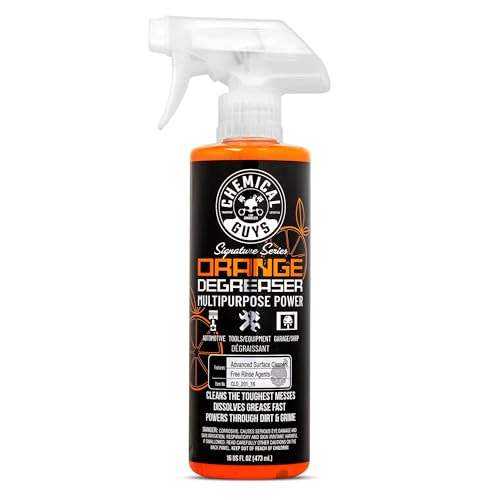
The citrus-based ready-to-use spray. Chemical Guys builds this degreaser on citrus cleaning agents and positions it as a professional-strength all-purpose degreaser for engines, tires, undercarriages, tools and shop equipment across cars, trucks, SUVs, motorcycles and RVs. In this lineup it is the middle path: water-based rather than a hot solvent, in a trigger bottle rather than an aerosol, and dilutable with water for lighter jobs if you want to stretch a bottle across general cleaning. The citrus formula still carries a serious eye-damage warning on its safety information, so gloves and eye protection are not optional. It suits the reader whose degreasing is mostly routine — a season of road film and light oil misting rather than a neglected engine — and who wants one bottle that also handles the undercarriage before a camping trip.
Specs
- Format: Trigger spray, liquid
- Base: Water-based, citrus cleaning agents
- Dilution: Ready to use; may be diluted for lighter-duty cleaning
- Size: 16 fl oz bottle
- Model: CLD_201_16 (listing CLD_201_16SW)
- Listed uses: Engines, tires, undercarriages, tools and shop equipment
- Label notes: Safety information warns of serious eye damage; wear eye protection and gloves
5. Meguiar’s Super Degreaser (D10801)
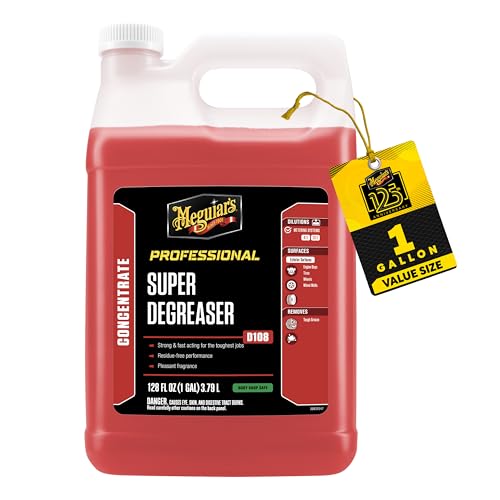
The professional concentrate. Meguiar’s sells Super Degreaser in its Detailer line as a gallon of water-based concentrate that you dilute yourself: a strong mix around 4:1 for heavy engine work, and a lighter mix around 10:1 for milder jobs such as tires and door jambs. That adjustability is the point — one container covers both the annual deep clean of a work truck’s engine block and quick wipe-down strength for everything else, and a labeled secondary spray bottle keeps the dilution honest. Because you control the mix, you also control the discipline: mix engine strength only for engines, keep it off paint and polished aluminum at full strength, and rinse thoroughly. For anyone maintaining several vehicles, a camper plus a tow rig, or shop equipment, this is the economical workhorse format.
Specs
- Format: Liquid concentrate for spray-bottle application
- Base: Water-based
- Dilution: Concentrate — about 4:1 for heavy-duty work, about 10:1 for lighter tasks
- Size: 1 gallon
- Model: D10801
- Line: Meguiar’s Detailer professional line
- Application: Dilute in a spray bottle; apply, dwell, agitate as needed, rinse
A Safe Degreasing Routine, Step by Step
Start with the engine cold and the vehicle parked where runoff can be managed. Disconnect nothing yet; first, bag the intake opening, alternator, fuse box and any exposed electronics, and note the connectors you intend to keep dry. Apply your chosen degreaser from the bottom of the bay upward so the lower, greasiest areas get the longest contact, and let it dwell for the full time the label states — 10 to 15 minutes for the Gunk Original, shorter for lighter formulas. Agitate baked deposits and the greasy ring around the oil filler and valve covers with a stiff parts brush. Rinse with a low-pressure stream from a garden hose, working top to bottom, and keep the stream moving rather than blasting one spot. Remove the bags only after rinsing, start the engine and let it idle a few minutes to dry the bay, then check for leaks while everything is clean enough to see them — that leak check is half the reason to degrease in the first place.
Frequently Asked Questions
Can I use a pressure washer to rinse? A gentle hose stream is the safer default. High-pressure water can force moisture past connector seals and into bearings and electronics. If you use a pressure washer at all, keep the pressure low, the nozzle far back, and the fan wide.
Which format is best for a first engine cleaning? A foaming product — the Gunk Foamy for a modern bay with plastic covers, or the WD-40 Specialist if you prefer a water-based formula. Foam shows you exactly where you have sprayed and stays in place while it works.
Are water-based degreasers weaker than solvent ones? They work differently rather than simply weaker. Solvents dissolve heavy petroleum buildup faster; water-based formulas rely on detergent chemistry, dwell time and agitation. On neglected, oil-soaked engines the solvent aerosols above have the edge; on routine grime the water-based picks are easier to live with.
How do I handle the runoff? Contain it where you can, collect heavily contaminated rinse water for disposal through local household-hazardous-waste channels where required, and never let it flow into a storm drain. Local rules vary, so check yours before the wash, not after.
Any products excluded on safety grounds? The five picks above were checked against recall and enforcement reporting for their brands before inclusion, and none is subject to a CPSC recall or FDA/EPA enforcement action. That is different from being harmless: the solvent aerosols carry flammability and Proposition 65 labeling, and every product here requires the cool-engine and runoff discipline described above.
More from Amazon
Programs that pair well with the guide above. Offers and eligibility are set by Amazon and may change.
Free shipping on eligible items, Prime Video and more. Eligible new members can start with a free trial.
Start a Prime free trialA Prime membership for ages 18-24 with a trial period. Eligibility is set by Amazon.
See Prime for Young AdultsAudiobooks and podcasts to listen to on the go. Eligible new members can start with a free trial.
Try Audible freeAd-free music streaming. Eligible new subscribers can start with a free trial.
Try Music Unlimited freeAs an Amazon Associate we earn from qualifying purchases.






Write Your Review
No reviews yet. Be the first to share your experience!