

Key takeaways
- An internal low-temperature charge cutoff, commonly around 32°F or 0°C.
- A self-heating function with a clearly stated activation temperature and power draw.
- An external temperature sensor connected to the charger or BMS.
- A battery compartment that remains above freezing, with charging disabled when it does not.
The best lithium RV batteries for most campers are 12V LiFePO4 batteries with an internal battery-management system (BMS), low-temperature charge protection, and enough usable capacity to cover your actual overnight load without forcing a complex installation.
For a typical travel trailer or camper van, a 100Ah LiFePO4 battery is the practical starting point; frequent boondockers usually benefit from 200Ah or more, while high-draw systems with induction cooking, air conditioning, or large inverters may need a carefully designed 24V or 48V bank. The right choice depends less on the advertised amp-hours than on usable energy, charging behavior in cold weather, physical fit, wiring, and warranty support.
Our top picks


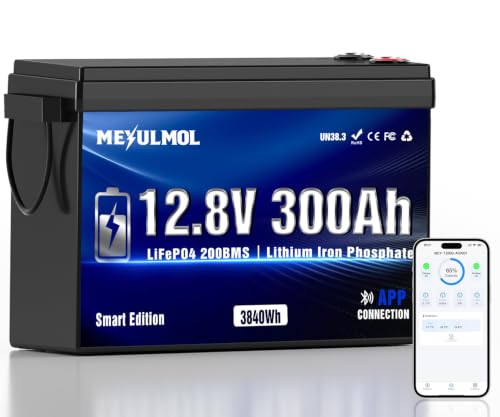
As an Amazon Associate we earn from qualifying purchases at no extra cost to you. Ratings are shown as listed on Amazon.
Quick picks by RV setup
| RV situation | Recommended battery setup | Why it fits | Typical market range |
|---|---|---|---|
| Weekend camper with modest loads | One 12V 100Ah LiFePO4 | About 1,280Wh nominal and roughly 1,000–1,150Wh practical | $180–$350 |
| Frequent boondocking | Two 12V 100Ah batteries in parallel, or one 200Ah battery | More reserve for refrigeration, lighting, fans, and electronics | $350–$800 |
| Camper van with limited battery space | One compact 12V 100Ah battery, or a premium 100Ah heated model | Simple installation and less weight than lead-acid | $250–$900 |
| High-inverter or residential-appliance system | Professionally planned 12V, 24V, or 48V bank | Higher voltage reduces cable current and voltage drop | $1,000–$6,000+ |
Why LiFePO4 is the default RV lithium chemistry
Most modern RV lithium batteries use lithium iron phosphate, usually abbreviated LiFePO4 or LFP. Compared with AGM or flooded lead-acid batteries, LFP batteries are lighter, maintain voltage better under load, accept charge faster, and generally provide far more usable energy before recharging.
A 100Ah, 12.8V LFP battery stores approximately 1,280Wh. Designing around an 80–90% discharge leaves about 1,024–1,152Wh usable. A similarly rated lead-acid battery is commonly limited to about 50% discharge if you want reasonable service life, so its practical energy may be closer to 600Wh.
Other lithium chemistries can offer different performance characteristics, but they are less common as direct replacements in recreational vehicles. Unless an RV manufacturer specifies another chemistry, LiFePO4 is the easiest type to match with a 12V RV electrical system.
Head-to-head: the main battery choices
| Battery type | Usable capacity target | Typical weight for about 1.2kWh nominal | Cycle-life expectation | Important limitation |
|---|---|---|---|---|
| 12V 100Ah LiFePO4 | 1,000–1,150Wh | 22–30 lb | About 2,000–5,000 cycles, depending on depth and temperature | Cannot safely charge below freezing without protection |
| 12V 100Ah AGM | About 600Wh for long service life | 60–75 lb | About 500–1,000 cycles at moderate discharge | Heavy and slower to recharge |
| 12V 100Ah flooded lead-acid | About 600Wh | 60–70 lb | About 300–800 cycles | Ventilation, inspection, and water maintenance may be required |
Cycle-life figures are laboratory or manufacturer estimates rather than a promise of service duration. Heat, leaving a battery fully charged for long periods, repeated deep discharges, excessive charging current, and poor storage conditions can shorten life.
Good lithium RV battery options by priority
Best established replacement: Battle Born 100Ah-class batteries
Battle Born’s 12V 100Ah LiFePO4 batteries are a familiar option for RV owners who value a long-standing RV focus, dealer availability, and well-documented installation support. A battery in this class typically weighs around 30 pounds and uses an internal BMS. Its premium price is easier to justify when warranty handling, technical guidance, and compatibility advice matter more than the lowest purchase cost.
Best budget route: LiTime or similar 100Ah-class LFP batteries
LiTime and comparable direct-to-consumer brands often offer 12V 100Ah and 200Ah batteries at substantially lower prices. They can be suitable for a straightforward weekend setup, particularly when the owner can verify dimensions, charging requirements, BMS limits, and warranty terms before purchase. Budget models vary more in enclosure construction, monitoring, low-temperature protection, and documentation, so compare the specifications rather than the amp-hour label alone.
Best integrated system: Victron-compatible battery banks
Victron Energy is especially attractive when the RV already uses a SmartShunt, solar controller, inverter/charger, or system monitor. Victron lithium batteries and compatible third-party LFP batteries can be integrated into a system with battery monitoring and configurable charging profiles. This is not necessarily the cheapest path, but it can make a larger installation easier to diagnose and expand. Confirm that the battery’s BMS can communicate with the selected Victron equipment; “Bluetooth” alone does not guarantee system-level compatibility.
Best cold-weather convenience: a heated LiFePO4 battery
Heated models from brands such as Battle Born, Dakota Lithium, Renogy, and other established RV suppliers can use internal heating elements to warm the cells before charging. This is useful for winter camping, but heating consumes energy and normally requires the battery to have a charging source available. A heated battery is not a substitute for insulation, correct storage, or a charging system that respects the battery’s temperature limits.
Cold-weather charging is the specification most buyers miss
Many LFP batteries may discharge below 32°F (0°C), but charging below freezing can cause permanent cell damage. Look for one of these protections:
- An internal low-temperature charge cutoff, commonly around 32°F or 0°C.
- A self-heating function with a clearly stated activation temperature and power draw.
- An external temperature sensor connected to the charger or BMS.
- A battery compartment that remains above freezing, with charging disabled when it does not.
Do not assume the RV converter, solar controller, or alternator charger knows the battery temperature. The charger may continue supplying current unless the BMS or a properly configured sensor interrupts it.
Installation requirements before you buy
A lithium battery is not always a drop-in replacement. Check these points first:
- Converter and solar charger: Confirm that the equipment has a lithium charging profile or adjustable voltage settings. Some older converters may undercharge an LFP battery or fail to provide the correct absorption behavior.
- Alternator charging: A DC-to-DC charger is often preferable in a camper van or tow vehicle because it controls current and protects the vehicle’s charging system. Do not connect a large lithium bank directly to an alternator without checking the vehicle and battery manufacturer’s requirements.
- Fuses: Install properly sized overcurrent protection close to the battery’s positive terminal. The fuse must protect the cable, not merely match the battery’s maximum output.
- Cables and terminals: Inverter loads can exceed 100 amps on a 12V system. Use short, correctly sized cables and secure connections; undersized wiring causes voltage drop and heat.
- Mounting: Secure the battery against movement, keep terminals protected from accidental shorts, and verify that the enclosure is appropriate for the compartment.
- Parallel banks: Use batteries of the same chemistry, capacity, age, and preferably model. Follow the manufacturer’s limits for the number of batteries in parallel or series.
A sizing calculation for real RV loads
Suppose a camper uses a 12V compressor refrigerator averaging 45 watts for 10 hours, a furnace fan averaging 35 watts for 4 hours, LED lights using 20 watts for 4 hours, and a laptop plus phones consuming 80 watt-hours:
- Refrigerator: 45W × 10h = 450Wh
- Furnace fan: 35W × 4h = 140Wh
- Lights: 20W × 4h = 80Wh
- Electronics: 80Wh
- Subtotal: 750Wh
Allowing 15% for wiring losses, inverter overhead, and estimating error produces about 863Wh. A 100Ah, 12.8V LFP battery with roughly 1,000–1,150Wh practical capacity could cover one such day, but with little reserve for cloudy weather or additional heating. A 200Ah bank would be the more comfortable choice for two days without recharging.
Warranty and ownership reality
Warranty length varies widely, from roughly five years on many mainstream batteries to ten years on some premium models. Read the exclusions: installation mistakes, unauthorized modifications, over-discharge, freezing damage, use outside temperature limits, and connecting incompatible batteries may not be covered. A longer warranty is most valuable when the company has a clear claim process, keeps replacement stock, and provides usable technical documentation.
The parts that usually cause trouble are not the lithium cells themselves. Loose lugs, corroded terminals, poor fuses, an incorrectly configured converter, and a BMS cutoff mistaken for a dead battery are more common ownership problems. Check connections periodically, keep the battery dry, avoid storing it at 0% state of charge, and disconnect parasitic loads during long storage. For storage, follow the manufacturer’s recommended state of charge rather than leaving the battery permanently connected to an uncontrolled charger.
Bottom line
Choose a 12V 100Ah LiFePO4 battery for a simple weekend setup, a 200Ah bank for regular boondocking, and a professionally designed higher-voltage system for large inverter loads. Prioritize low-temperature charge protection, verified charger compatibility, secure installation, and practical warranty support over Bluetooth features or the lowest price. Those criteria determine whether the battery delivers reliable camp power long after the product listing has been forgotten.


Write Your Review
No reviews yet. Be the first to share your experience!