

Key takeaways
- Compare the best pizza stones and steels for crispy crusts at home, from cordierite and glazed ceramic to a heavy baking steel and cast iron.
As an Amazon Associate we earn from qualifying purchases.
A home oven tops out around 500 to 550 °F, far below a pizzeria deck, so the crust is where home pizza usually fails: pale, soft underneath, done on top before it ever crisps below. A baking stone or steel fixes that by banking heat while the oven preheats and dumping it into the dough on contact. The five surfaces below all live in a home oven or on a grill — this is a guide to the surface you bake on, not to countertop pizza ovens.
The honest split is this. Steel moves heat into dough far faster than any stone, so it produces the darkest, most leopard-spotted bottoms at ordinary oven temperatures — but it is heavy, it costs more, and at your oven’s maximum setting it can scorch a bottom crust before the top catches up. Cordierite stone is slower and more forgiving, wicks moisture out of the dough, and asks only that you respect its one weakness: thermal shock. Cast iron splits the difference and shrugs off abuse that would crack any stone. Glazed ceramic is the gentle option, built as much for serving as for baking. Every one of them also needs a real preheat — 45 to 60 minutes, whatever the listings claim — and the buying guide after the picks explains why.
Affiliate Disclosure: This article contains affiliate links. If you buy through a link on this page, the site may earn a commission at no extra cost to you.
1. Baking Steel Original — Best Steel for Serious Home Pizza
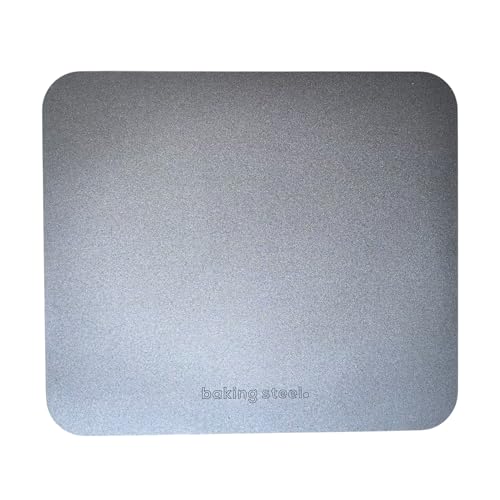
This is the product that created the baking steel category, and it is still the benchmark. The current listing is a 14 by 16 inch plate of carbon steel, a quarter inch thick and 16 pounds, shipped pre-seasoned and ready to cook on. That footprint holds a 13 inch pizza or two small loaves side by side, and it leaves the airflow gap a standard oven needs around the edges.
In a 500 °F oven the steel’s conductivity does what stone cannot: the bottom sets fast, browns evenly and takes on proper leopard spotting in roughly eight minutes, bake after bake, because the plate holds its heat instead of dipping the way a thin stone does. It will never crack, chip or shatter. The trade-offs are real, though. Sixteen pounds is a genuine lift in and out of a hot oven, the steel wants the same keep-it-dry, keep-it-seasoned care as cast iron, and its speed cuts both ways — run it at your oven’s absolute maximum with a sweetened dough and the bottom can scorch, so many owners bake a notch below the top setting. If your goal is the closest thing to a pizzeria deck a home oven can produce, this is the pick.
Specs
- Material: Carbon steel, pre-seasoned
- Dimensions: 16 x 14 in, 1/4 in thick
- Weight: 16 lb
- Max temperature: 1,000 °F
- Shape: Rectangular
- Best use: Home oven and grill; pizza, sourdough and flatbreads
2. Unicook Pizza Stone 15 x 12 — Best First Stone
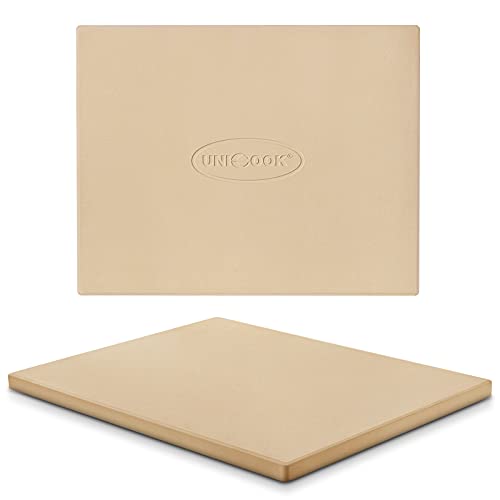
The Unicook is the cordierite stone most people should start with. It measures 15 by 12 inches and 0.6 inches thick, weighs 6.8 pounds, and is molded from natural cordierite under high pressure, which is what gives it its thermal shock resistance. The maker rates it to 1,450 °F, so it is equally at home in an oven or on a gas or charcoal grill, and the rectangular shape earns its keep with bread, rolls and cookies as well as pizza. A plastic scraper for dough and cleanup is included in the box.
Cordierite’s porous surface pulls moisture out of the dough as it bakes, which is the stone’s whole trick: a dry, crackly underside instead of a steamed one. The limits are size and care. The maker is upfront that the surface suits pizzas up to about 11 inches — a stretched 14 inch pie will overhang — and the stone is porous in both directions, so it stains, keeps odors if you soak it in soapy water, and should be cleaned dry with the scraper and a brush once cool. Treat the darkening as patina, not damage.
Specs
- Material: Cordierite
- Dimensions: 15 x 12 in, 0.6 in thick
- Weight: 6.8 lb
- Max temperature: 1,450 °F
- Shape: Rectangular
- Best use: Oven and grill; first stone, bread and cookies as well as pizza
3. CastElegance Pizza Stone — Square Stone for Grill and Oven

CastElegance builds its stones from Thermarite, its engineered cordierite blend, and fires each one at 2,000 °F during manufacture to burn off the chemical odor that cheaper stones give off on their first bakes. This 14 by 14 inch square is 5/8 inch thick yet weighs only about 5.7 pounds, noticeably lighter than most stones its size, which matters when you are carrying it out to a grill. The square footprint also uses a round kettle grill’s grate more efficiently than a round stone does.
The lighter build is the honest compromise. Less mass means a smaller heat bank, so back-to-back pizzas need a few minutes of recovery between launches, and a thick steel will still out-crisp it at the same oven setting. What you get instead is a stone that heats evenly, shrugs off thermal shock better than basic ceramic, and pulls the same moisture-wicking trick as any good cordierite. For grill work and smaller ovens, the size and weight make a strong case.
Specs
- Material: Thermarite cordierite
- Dimensions: 14 x 14 in, 5/8 in thick
- Weight: 5.66 lb
- Max temperature: Oven- and grill-rated; kiln-fired at 2,000 °F in production
- Shape: Square
- Best use: Kettle and gas grills, smaller ovens
4. Lodge BOLD 14 Inch Cast Iron Pizza Pan (P14P3) — The Cast Iron Pick

Lodge’s P14P3 is the iron answer to the stone-versus-steel argument: a 14 inch round cast iron baking pan with a low rim, dual handles and a pre-seasoned surface. Measured handle to handle it runs about 18.4 inches wide and it weighs 9.53 pounds. There is no temperature ceiling to respect in any home setting — it works in the oven, under the broiler, on a grill, on the stovetop and over a campfire, and it doubles as a griddle for flatbreads, quesadillas and roasted vegetables.
Iron’s virtues are toughness and forgiveness. It cannot crack from thermal shock the way a stone can, and the rim keeps a wet, heavily topped pizza contained. The compromises: it stores less total heat than a thick steel, so the bottom browns a step less aggressively; the rim makes sliding a pizza in with a peel awkward, so most people build the pizza in the pan or launch on parchment; and like all cast iron it needs to be dried and lightly oiled to stay rust-free. As the one surface here that will also survive being dropped on a patio, it earns its place.
Specs
- Material: Cast iron, pre-seasoned
- Dimensions: 14 in cooking surface; 18.43 x 14.75 x 1.25 in overall
- Weight: 9.53 lb
- Max temperature: No stated limit; oven, broiler, grill, stovetop and campfire safe
- Shape: Round, low rim with dual handles
- Best use: Oven, grill and campfire; doubles as a griddle and baking pan
5. Emile Henry Flame Pizza Stone — Glazed Ceramic for Bake-and-Serve

Emile Henry’s Flame ceramic stone is the outlier here, in a useful way. It is a 14.5 inch round glazed stone with integrated handles, made in France, and rated to 900 °F for ovens, broilers and grills. The glaze is the point: you can cut the pizza directly on the stone without scratching it, carry it to the table by its handles and serve from it, then wash it with soap and water or put it in the dishwasher — the only surface in this lineup that allows either.
That convenience comes with a performance caveat worth stating plainly. A glazed surface does not wick moisture the way raw cordierite does, so bottoms come out crisp but less aggressively browned than on stone or steel, and this is the gentlest baker of the five. It is still ceramic, too: it resists thermal shock well for its class, but it can chip if knocked and should not be slammed from a hot oven onto a cold wet counter. Choose it when easy cleanup and table service matter more than maximum char.
Specs
- Material: Glazed Flame ceramic
- Dimensions: 14.5 in diameter
- Weight: 5.7 lb
- Max temperature: 900 °F
- Shape: Round with integrated handles
- Best use: Oven, broiler and grill; cut and serve on the stone; dishwasher safe
Buying Guide: Steel, Stone, Iron or Ceramic?
Start with how you bake. If you chase dark, blistered, pizzeria-style bottoms in a standard oven, steel is the strongest tool here and the Baking Steel is the one to get — just respect its weight and its tendency to scorch at maximum temperature. If you bake as much bread as pizza, a rectangular cordierite stone is the more versatile and forgiving surface. If the surface will live on a grill or travel to a campfire, cast iron is the one that cannot be killed. If pizza night is a family ritual and the stone doubles as the serving platter, glazed ceramic wins on everything except char.
Preheat longer than the listings say. Many product pages suggest 15 to 30 minutes. That heats the air, not the mass. A stone or steel needs 45 to 60 minutes at temperature before its core is soaked through, and launching early is the most common cause of the pale, soggy bottoms people blame on the product. Put the surface in a cold oven, set your temperature, and give it the full hour for the first pizza; between pizzas, a few minutes of recovery is enough for stone, less for steel.
Thermal shock has rules, and they are simple. Cold dough on a ripping-hot stone is fine — that small, brief contact does not crack anything. What cracks stones is a big, sudden temperature swing across the whole surface: sliding a cold stone into an already hot oven, running water over a hot stone, or setting a hot stone down on a cold, wet surface. Heat the stone with the oven, cool it with the oven, clean it when it is cool. Cast iron and steel are effectively immune to all of this, which is their quiet advantage.
Measure before you buy. Leave at least an inch, ideally two, of clearance on every side of the surface so hot air can circulate; a stone that wall-to-wall fills the rack bakes unevenly and can block the oven’s vents. Measure the rack, the door opening and the grill grate, and remember that handles add inches — the Lodge above is a 14 inch pan that needs an 18.4 inch space. Rectangular surfaces use a rectangular rack better and suit loaves; round ones fit kettle grills.
Care is material-specific. Cordierite: scrape, brush, never soak, never soap — stains are cosmetic and harmless. Steel and cast iron: keep them dry and seasoned, exactly like a cast iron skillet. Glazed ceramic: soap, water, dishwasher, done. None of them needs oiling before baking, and flour or semolina on the surface — not oil — is what keeps dough from sticking.
Get the preheat and the material right, and any of these five will end the pale-crust problem. Pick by the baking you actually do, not by the highest temperature number on the box.
More from Amazon
Programs that pair well with the guide above. Offers and eligibility are set by Amazon and may change.
Free shipping on eligible items, Prime Video and more. Eligible new members can start with a free trial.
Start a Prime free trialA Prime membership for ages 18-24 with a trial period. Eligibility is set by Amazon.
See Prime for Young AdultsAudiobooks and podcasts to listen to on the go. Eligible new members can start with a free trial.
Try Audible freeAd-free music streaming. Eligible new subscribers can start with a free trial.
Try Music Unlimited freeAs an Amazon Associate we earn from qualifying purchases.







Write Your Review
No reviews yet. Be the first to share your experience!