

Key takeaways
- Compare the best deer calls for whitetail: adjustable grunt tubes, a freeze-resistant 10-in-1 call, a snort-wheeze call, a doe bleat can and a rattle bag.
As an Amazon Associate we earn from qualifying purchases.
Calling whitetails is a conversation, and like any conversation it fails when you say the wrong thing at the wrong time. The tools fall into four families: grunt tubes that imitate buck vocalizations, bleat calls that imitate does and fawns, snort-wheeze calls that challenge a dominant buck, and rattling gear that imitates two bucks fighting. Which family matters depends on the calendar. Soft contact grunts work early, aggressive rattling belongs to the peak of the rut, and a plain doe bleat is often the best sound in the late season. Within the grunt tubes there is a second divide: adjustable reeds that shift pitch to cover several deer, and fixed hand-tuned reeds that do one sound the same way every time. Cold is the third factor, because breath moisture can freeze a reed solid on a November morning. This guide compares five calls sold on Amazon that span all four families, so you can build a lanyard that matches the phase of the season you actually hunt.
Affiliate Disclosure: This article contains affiliate links. If you buy through them, we may earn a commission at no extra cost to you.
1. Primos Trophy Grunter Call — Best Adjustable Grunt Tube for Close-In Calling

The Trophy Grunter is the classic adjustable-reed grunt tube. Its 6-in-1 reed assembly shifts between settings to produce buck grunts, doe grunts, and bleats from a single call, and the expandable hose changes both tone and direction: stretch it out for a deeper, more distant sound, or cup the end to throw the call behind you so an approaching buck does not pinpoint your tree. That adjustability is the argument for this design — one call covers a young buck’s soft grunt and a doe bleat without anything coming off your lanyard.
Primos builds this call on a synthetic barrel rather than wood, which shrugs off rain and frost without swelling or cracking. It is light enough to hang around your neck for a full sit, and the reed settings are positive enough to find by feel in the dark. Primos also sells a hardwood-barrel sibling, the Hardwood Grunter, mainly through sporting-goods retailers; the Trophy Grunter is the line’s widely stocked Amazon listing and uses the same patented 6-in-1 adjustable reed concept. For close-in bowhunting setups where volume control matters more than raw reach, this is the sensible default grunt tube.
Specs
- Type: Grunt tube
- Reed: Adjustable 6-in-1 reed assembly
- Sounds: Buck grunts, doe grunts, bleats
- Hose: Expandable, varies tone and direction
- Includes: Lanyard
- Model: 707
2. Illusion Systems Extinguisher Deer Call — Best 10-in-1 Call for Buck, Doe and Fawn
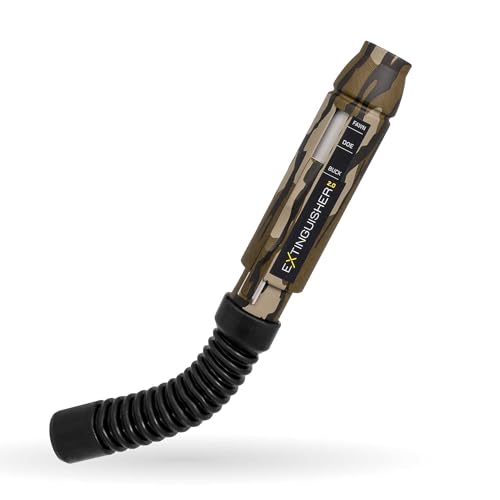
The Extinguisher takes the adjustable idea further than a twist ring can. Its patented ModiSlide system slides the reed assembly along the tone board, so pitch changes happen instantly, one-handed, without looking down — slide one way for a mature buck grunt, the other for a doe bleat or a fawn bawl. Illusion counts ten distinct vocalizations across buck, doe, and fawn, which makes this the closest thing here to a full season of calling in one tube.
Two details suit it to cold, late-season sits. The dual-layer throat tube produces a fuller, more directional sound than a single-wall hose, and the FreezeFree design is built to keep the slide working when a reed goes wet or frosty — Illusion says working the slide breaks a frozen reed loose, which addresses the most common way grunt calls fail in November. The call is assembled and tuned in the USA, and Illusion provides access to an instructional calling library so you can hear each vocalization before you try it on live deer. If you want one call and no kit, this is the one.
Specs
- Type: Grunt tube
- Reed: ModiSlide adjustable reed system
- Sounds: 10-in-1 — buck, doe and fawn vocalizations
- Throat tube: Dual-layer, directional
- Cold design: FreezeFree slide
- Dimensions: 12 x 5.25 x 2 in
- Model: 741
3. WoodHaven The Intimidator — Best Grunt and Snort-Wheeze Combo

The Intimidator is the fixed-reed counterargument. WoodHaven hand-tunes each call to one voice — a deep, mature-buck grunt — and because the reed never moves, that voice is identical on the first blow of October and the last morning of the rut. Adjustable calls gain range and lose a little repeatability; this call gives up range on purpose. For hunters who mostly need one convincing dominant-buck sound, that trade is worth making.
What sets it apart is the second sound built into the same body: a snort wheeze. The snort wheeze is a challenge call — the sound a buck makes to warn a rival off — and it is a peak-rut tool for a specific situation, when a mature buck is visible but hanging up out of range and ignoring grunts. A short snort wheeze tells him a rival is in his territory. The body runs longer than most grunt tubes at roughly 13 inches, finished in black to keep reflections down. If your rut hunting is about provoking one specific buck rather than blind-calling cover, this is the specialist to carry alongside a bleat can.
Specs
- Type: Grunt tube with snort wheeze
- Reed: Fixed, hand-tuned
- Sounds: Mature buck grunt, snort wheeze
- Length: Approx. 13 in
- Finish: Black
- Model: WH360
4. Primos The Original CAN — Best Doe Bleat for Beginners and the Rut

The Original CAN is the simplest call on this list and, during the rut, possibly the deadliest. There is no reed to tune and no technique to learn: seal your thumb over the raised thumb-hole locator, tip the can over, and it produces a doe estrus bleat as the internal mechanism cycles. Tip it back and it resets. Because the sound is mechanical, it is the same bleat every time, which is exactly what a beginner needs and what a pressured buck expects to hear.
The design has practical virtues beyond simplicity. With no exposed reed, there is nothing to freeze, crack, or fill with moisture on a cold sit, and the can is small enough to disappear into a coat pocket. Primos makes the family in three sizes — a smaller Lil’ Can, this Original, and a louder Great Big Can for open country and windy days — and the Original is the middle ground most whitetail hunters in timber and small fields want. Use it for estrus bleats during the rut and for plain doe bleats in the late season, when bucks are searching for the last receptive does and does themselves will investigate a bleat. Pair it with any grunt tube above and you have the two-call kit that covers most of the season.
Specs
- Type: Flip-over bleat can
- Sound: Doe estrus bleat
- Operation: Tip to call, thumb-hole locator for a consistent seal
- Reed: None — nothing to freeze
- Size: Original (mid-size of the CAN family)
- Model: PS7064
5. Hunters Specialties Ruttin’ Buck Rattling Bag — Best Rattling Bag for the Peak Rut

Rattling imitates the sound of two bucks sparring or fighting, and a rattling bag is the compact way to make it. The Ruttin’ Buck bag holds shaped hardwood dowels inside a camo fabric bag; roll and rub the bag between your palms and the dowels click and clack like antler tines. It works one-handed, which matters when your other hand needs to be on a bow or rifle, and a hanging cord keeps it on your stand hook instead of in a pocket.
Against real shed antlers, the trade-offs are honest. A bag is far quieter to carry, cannot clank against a stand or stab you in a fall, and produces a convincing sparring sound at moderate volume — which suits the light tickling that works in the pre-rut. Real antlers are louder and sharper for a full peak-rut fight sequence in open country. Technique matters more than the tool: start soft in case a buck is close, build for twenty to thirty seconds, then stop and watch. Many hunters pair a bag with a grunt tube, adding grunts between rattling sequences to sell the illusion of two bucks with an audience.
Specs
- Type: Rattling bag
- Sound: Antler sparring and fighting
- Construction: Hardwood dowels in a camo fabric bag
- Operation: One-hand roll
- Includes: Hanging cord
- Model: 00181
How to Choose
Match the call to the season phase first. In the early season, deer are social but not aggressive: soft contact grunts and quiet doe bleats, used sparingly, are the right register, and loud rattling mostly educates deer. In the pre-rut, bucks start checking does and sparring — regular grunting, light rattling sequences, and the first estrus bleats all come into play. At the peak of the rut, the full vocabulary works: aggressive rattling, snort wheezes at a visible rival, and estrus bleats. In the late season, deer are wary and food-focused; soft doe and fawn bleats are usually the safest sounds, and subtlety beats volume.
Then decide between adjustable and fixed reeds. An adjustable tube — the Trophy Grunter’s ring or the Extinguisher’s slide — covers buck, doe, and fawn from one call, which is ideal if you carry one lanyard call all season. A fixed hand-tuned call like the Intimidator gives up that range for a grunt that never changes, which some hunters trust more. Neither is wrong; the question is whether you would rather carry range or repeatability.
Think about volume and terrain. Timber and small fields reward soft, directional calling — an expandable hose or throat tube you can cup and aim. Open farm country, river bottoms, and windy ridges call for more reach, which is where a louder bleat can size or a set of real antlers earns its place over a bag.
Plan for cold. Breath moisture freezes on reeds, and a frozen call in November is a paperweight. Freeze-resistant slide designs help, keeping the call inside your jacket between sequences helps more, and reedless tools — a bleat can and a rattling bag — cannot freeze at all. Carrying a can as a backup to your grunt tube is cheap insurance.
A note on electronic calls: unlike predator hunting, electronic calling for deer is restricted or prohibited in many places, and the rules differ by state and sometimes by season. The calls in this guide are all manual. Before using any electronic deer call, check your current local hunting regulations — do not assume it is legal where you hunt.
FAQ
What is the best deer call for a beginner?
A flip-over bleat can like The Original CAN. It produces a correct doe bleat with no breath control or reed technique, so a new hunter can call on the first sit. Add a simple grunt tube later, once you have heard real deer vocalize.
When should I rattle for whitetails?
Light sparring sounds can work from the pre-rut onward, and aggressive rattling is a peak-rut tactic. Rattle in sequences of about twenty to thirty seconds, then stop and watch for several minutes — bucks often approach silently and downwind. Avoid heavy rattling in the late season, when bucks are conserving energy.
Why does my grunt call freeze up, and how do I stop it?
Warm, wet breath condenses on the reed and freezes in cold air, locking the reed to the tone board. Keep the call inside your jacket between sequences, blow warm air through it before a series, and consider a freeze-resistant slide design. A reedless bleat can makes a reliable backup on the coldest mornings.
How often should I call when blind calling?
A common rhythm is a short sequence — a few grunts or a bleat — every twenty to thirty minutes, then silence and observation. Over-calling is the usual beginner mistake: it gives a buck your exact position without giving him a reason to commit. The moment you see a buck reacting, stop calling and let curiosity finish the job.
Are electronic deer calls legal?
It depends on where you hunt. Many states prohibit electronic calls for deer even where they allow them for other species, and rules change. Check the current regulations for your state and season before using one; every call in this guide is manual and needs no such check.
Conclusion
Build your lanyard around the calendar. The Trophy Grunter is the dependable adjustable grunt tube, the Extinguisher covers buck, doe, and fawn in one freeze-resistant call, the Intimidator adds a hand-tuned grunt and a snort wheeze for challenging a specific buck, The Original CAN delivers a foolproof doe bleat in any weather, and the Ruttin’ Buck bag handles rattling without the bulk of real antlers. Most hunters need two of these — a grunt tube and the CAN — and the rest is knowing when to stay quiet.
More from Amazon
Programs that pair well with the guide above. Offers and eligibility are set by Amazon and may change.
Free shipping on eligible items, Prime Video and more. Eligible new members can start with a free trial.
Start a Prime free trialA Prime membership for ages 18-24 with a trial period. Eligibility is set by Amazon.
See Prime for Young AdultsAudiobooks and podcasts to listen to on the go. Eligible new members can start with a free trial.
Try Audible freeAd-free music streaming. Eligible new subscribers can start with a free trial.
Try Music Unlimited freeAs an Amazon Associate we earn from qualifying purchases.


Write Your Review
No reviews yet. Be the first to share your experience!