

Key takeaways
- Five brush-on tire bead sealers compared by formula thickness, applicator style and can size, plus the rim damage that no sealer can fix safely.
As an Amazon Associate we earn from qualifying purchases.
A tire that loses a little air every week, with no nail in the tread and a valve stem that checks out, is usually leaking at the bead. The bead is the reinforced edge of the tire that presses against the rim flange, and that rubber-to-metal contact is the only thing holding the air in. Corrosion on a steel rim, white oxidation on an alloy wheel, a flake of old rubber or a shallow pit in the bead seat opens a channel too small to see and big enough to empty a tire over a fortnight. A bead sealer is the compound made for exactly that gap: a thick, brush-on liquid that is painted onto the bead and the rim flange at mounting time, then cures into a flexible rubber film that fills the imperfections and seals the joint.
The caution has to come first, because it decides whether any product in this guide belongs in your cart. Bead sealer treats a bead-seat leak: a sound tire and a sound rim that simply do not meet cleanly. It does not repair a cracked rim, a bent flange, a torn or cut bead, or a tire with damaged bead wires. A tire that will not hold a bead at all needs inspection, not more compound, and stacking extra coats over structural damage only hides a problem that will come back at speed. Check the rim for cracks and deep corrosion, check the bead for cuts and chunking, and if either fails that check, the sealer stays on the shelf.
Affiliate Disclosure: This article contains affiliate links. If you buy through a link on this page, we may earn a commission at no additional cost to you.
How to Choose a Tire Bead Sealer
Thickness is the main buying decision. Bead sealers are sold in grades. A standard formula flows into fine scratches and light oxidation on rims that are basically healthy. Heavy-duty and extra-heavy-duty grades are progressively thicker, and that body is what lets them bridge the deeper pitting found on older steel wheels, farm equipment rims and trailer wheels that live outside. Thicker is not automatically better: on a clean alloy rim a heavy grade is harder to spread evenly and easier to over-apply, while a standard grade on a badly pitted rim may not fill the voids at all. Match the grade to the worst rim the can will see.
Brush-top cans save a separate applicator. Most quart cans in this class are plain screw-top cans that need a separate brush, while some listings have the applicator built into the lid. The built-in brush keeps the compound off your hands, spreads a more even coat, and seals inside the can between jobs so it does not dry into a stick. If a listing does not say brush top, assume a separate brush is needed.
Preparation matters more than brand. Every maker in this class gives the same basic sequence: break the bead, clean the rim flange and the tire bead down to sound material with a wire brush, wipe away rust dust and old rubber, then paint the sealer onto both surfaces and mount the tire while the compound is still wet or tacky so inflation pressure forces it into the pits. Sealer painted over loose rust seals the rust, not the rim, and the leak returns.
These are solvent-based, flammable products. The formulas in this guide are built on petroleum solvents such as heptane, and the cans are labelled flammable. Work away from ignition sources, keep the can closed and stored out of heat, and follow the label directions for the specific product. That is routine shop practice, but it rules out treating a bead sealer like a tube of grease that can live anywhere.
A bead sealer is not a puncture sealant. Through-valve sealant slimes are a different product for a different job: they coat the inside of the tire and plug tread punctures. They sit nowhere near the bead seat on a stationary tire, which is why they do so little for bead leaks. Nothing in this guide is an in-tire sealant, and no bead sealer here is poured through a valve stem.
1. Xtra Seal Bead Sealer, 32 oz Can (14-101)
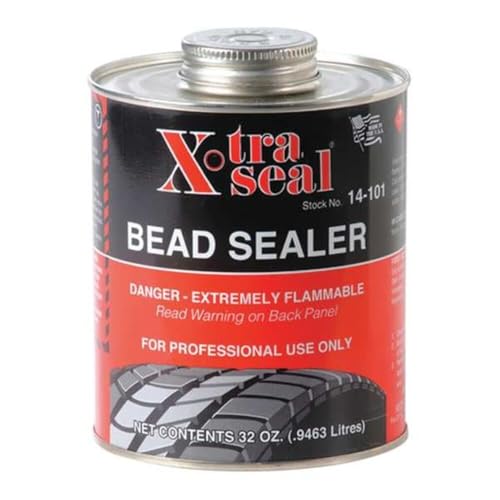
The standard can from 31 Incorporated’s Xtra Seal line is the reference product in this class, the one the maker’s heavier grades are measured against. Part number 14-101 is a black, brush-on liquid sold in a 32-ounce can, formulated for sealing small air leaks between the tire bead and the wheel. The maker’s safety data describes a natural rubber latex carried in a heptane solvent, which flashes off after application and leaves the rubber behind as a thin, flexible gasket film on the bead seat.
This is the grade for rims in decent condition: passenger car and light truck wheels with light surface rust, early alloy oxidation, or a bead seat that simply never sealed perfectly from new. It is the thinnest of the three Xtra Seal thicknesses, so it spreads easily and wicks into fine imperfections rather than sitting on top of them. The listing does not describe the can as a brush-top design, so plan on a separate applicator brush. The formula is labelled flammable and is not water resistant, both normal for the class and both worth knowing before storage.
Specs
- Container: 32 fl oz (1 quart) can
- Maker part number: 14-101 (model TI250)
- Formula: black liquid bead sealer, standard thickness
- Base: natural rubber latex in solvent, per maker data
- Application: brush-on to tire bead and rim flange
- Stated use: sealing small air leaks between tire bead and wheel
- Flammability: flammable, per product labelling
- Water resistance: not water resistant, per listing data
2. TECH Tire Bead Sealer, 1 Quart (No. 735)

TECH, the tire repair house behind a large share of professional shop supplies, sells its bead sealer as catalogue number 735 in a 0.95-litre can, the quart size listed here. TECH describes the product as a natural rubber solution designed to seal leaks around the bead of a tire, applied to both the rim and the tire bead. The maker also states that the coating protects the bead area against future leaks and corrosion, which is the second half of the job on wheels that have already started to oxidise.
The listing positions it for tubeless tire service across factory, replacement and used wheels, filling the small gaps between tire beads and wheel edges where air escapes. That breadth makes it the natural pick for a mixed workload: daily-driver alloy wheels one day, an older steel spare or trailer wheel the next. TECH’s own guidance leads with cleaning, directing users to remove corrosion with a wire brush before the sealer goes on. The formula is a flammable liquid per the maker’s safety data, in line with the rest of the class.
Specs
- Container: 1 quart (32 fl oz, 0.95 L) can
- Maker number: 735
- Formula: natural rubber solution, brush-on
- Application: coat both rim flange and tire bead
- Stated use: tubeless tires on factory, replacement or used wheels
- Maker-stated extra role: protects bead area against future leaks and corrosion
- Flammability: flammable liquid, per maker safety data
3. Xtra Seal Extra Heavy Duty Bead Sealer, 32 oz (14-101B)

At the other end of the Xtra Seal thickness range sits 14-101B, the Extra Heavy Duty grade. The maker sells the family in three thicknesses, and this is the thickest: the listing describes it plainly as extra thick, and thicker than the standard 14-101. That extra body is the entire point of the product. On a rim whose bead seat is cratered with rust pits, a thin sealer can bridge the shallow spots and still leave the deep ones open; a heavy compound stays where it is brushed and fills the voids in one coat.
This is the can for the rough end of the workload: aged steel wheels, agricultural and implement rims, trailer wheels that sit in grass, and any bead seat that comes back from the wire brush still looking pitted. The trade-off is application effort, since a compound this thick spreads more slowly and is easier to lay on unevenly, and on a smooth, healthy rim it offers nothing the standard grade does not. It carries the same flammable labelling as the rest of the family.
Specs
- Container: 32 fl oz can
- Maker part number: 14-101B
- Formula: extra heavy duty, the thickest of the maker’s three bead sealer grades
- Application: brush-on to tire bead and rim flange
- Stated use: sealing small air leaks between tire bead and wheel, aimed at rougher rim surfaces
- Flammability: flammable, per product labelling
4. Xtra Seal Tire Bead Sealer, 32 oz Black with Brush Top Can
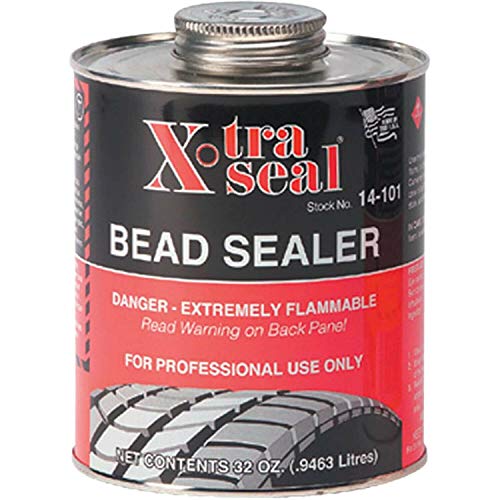
This listing packages the black Xtra Seal bead sealer in a brush-top can, with the applicator brush built into the lid. That single detail changes the working experience more than any formula tweak: the brush is always the right size for the can, it goes back into the compound after every use so it never dries out, and there is no separate brush to clean, lose or leave stuck to the bench. For a home garage that mounts its own tires a few times a year, that convenience is the difference between a tidy one-can job and a small mess.
The compound itself is the black liquid sealer described as sealing small air leaks between the tire bead and the wheel, and it is labelled flammable like the standard can. Buyers comparing this listing with the plain 14-101 can above are really choosing a container format rather than a different chemistry: pick the brush top if the applicator matters, pick the standard can if a separate brush is already part of the tire kit. Either way, the rim still needs the same wire-brush preparation before the coat goes on.
Specs
- Container: 32 fl oz brush-top can
- Applicator: brush built into the can top
- Formula: black liquid bead sealer
- Application: brush-on to tire bead and rim flange
- Stated use: sealing small air leaks between tire bead and wheel
- Flammability: flammable, per product labelling
5. X-Tra Seal Bead Sealer, Two-Can Pack (2 x 32 oz Brush-Top Cans)

The final listing is the same brush-top format sold as a two-can pack: two 32-ounce cans of black X-Tra Seal bead sealer with brush tops, 64 ounces of compound in total. It exists for throughput rather than for a different formula. A quart of bead sealer covers a great many wheels, since each bead seat takes only a thin painted coat, but a small shop, a farm with a fleet of implements, or a household maintaining several trailers goes through cans steadily, and the second can means the job never stalls with a tire off the rim and an empty can in hand.
The format also suits splitting the stock: one can lives with the tire tools and one stays sealed as the spare. Application, preparation and handling notes are identical to the single brush-top can above, because the product is identical; only the quantity changes. For a single set of wheels one can is the sensible buy; this pack earns its place when tire work is a recurring chore.
Specs
- Package: two 32 fl oz cans (64 fl oz total)
- Applicator: brush tops on both cans
- Formula: black liquid bead sealer
- Application: brush-on to tire bead and rim flange
- Stated use: bead-area sealing for repeat tire service and multi-vehicle use
- Flammability: flammable, per product labelling
Applying Bead Sealer So the Repair Lasts
The products above differ in thickness and packaging, but the procedure that makes any of them work is the same. Confirm the leak is actually at the bead first: inflate the tire, lay the wheel flat, and run soapy water around both bead seats, watching for a line of fine bubbles. A leak at the valve, the tread or a rim crack will not be fixed by anything in this guide.
Deflate the tire fully, remove the valve core, and break the bead on the leaking side. Clean the rim flange and the tire bead with a wire brush until loose rust, oxidation and old rubber are gone, then wipe both surfaces dry. Paint an even coat of sealer around the full circumference of the rim seat and the bead, seat the bead while the compound is still tacky, and inflate with a clip-on chuck while standing clear of the bead path, never exceeding the bead-seating pressure marked by the tire maker. Recheck with soapy water once the tire is at working pressure. A bead that still bubbles after a clean, correct application is telling you the surface underneath is worse than it looked, and that wheel needs refinishing or replacement rather than a third coat.
More from Amazon
Programs that pair well with the guide above. Offers and eligibility are set by Amazon and may change.
Free shipping on eligible items, Prime Video and more. Eligible new members can start with a free trial.
Start a Prime free trialA Prime membership for ages 18-24 with a trial period. Eligibility is set by Amazon.
See Prime for Young AdultsAudiobooks and podcasts to listen to on the go. Eligible new members can start with a free trial.
Try Audible freeAd-free music streaming. Eligible new subscribers can start with a free trial.
Try Music Unlimited freeAs an Amazon Associate we earn from qualifying purchases.

Write Your Review
No reviews yet. Be the first to share your experience!